How Does an Excavator Hydraulic Radiator Work?
An excavator hydraulic radiator plays a critical role in keeping the hydraulic system within a safe operating temperature range. During excavation, lifting, and continuous heavy-duty operation, hydraulic oil absorbs a large amount of heat. If that heat is not removed effectively, oil viscosity may drop, lubrication performance may decline, and hydraulic components may wear more quickly. This is why the excavator hydraulic radiator, also known as a hydraulic oil cooler, is essential for reliable machine performance.
Understanding how an excavator hydraulic radiator works can help equipment owners and operators improve cooling efficiency, reduce downtime, and protect major hydraulic components in demanding construction and mining environments.
Why Hydraulic Systems in Excavators Generate Heat
Excavators rely on hydraulic oil under high pressure to transfer power from the engine to cylinders, motors, and other actuators. As the oil flows through pumps, valves, hoses, and motors, heat is generated by pressure loss, fluid friction, internal leakage, and continuous heavy-duty operation.
In demanding applications such as mining, demolition, and earthmoving, hydraulic oil temperature can rise quickly. If oil becomes too hot, viscosity may decrease, seals may age faster, internal leakage may increase, and the overall hydraulic system may lose efficiency. For this reason, excavators use a dedicated hydraulic cooling system, and the hydraulic radiator is one of its most important components.
What Is an Excavator Hydraulic Radiator?
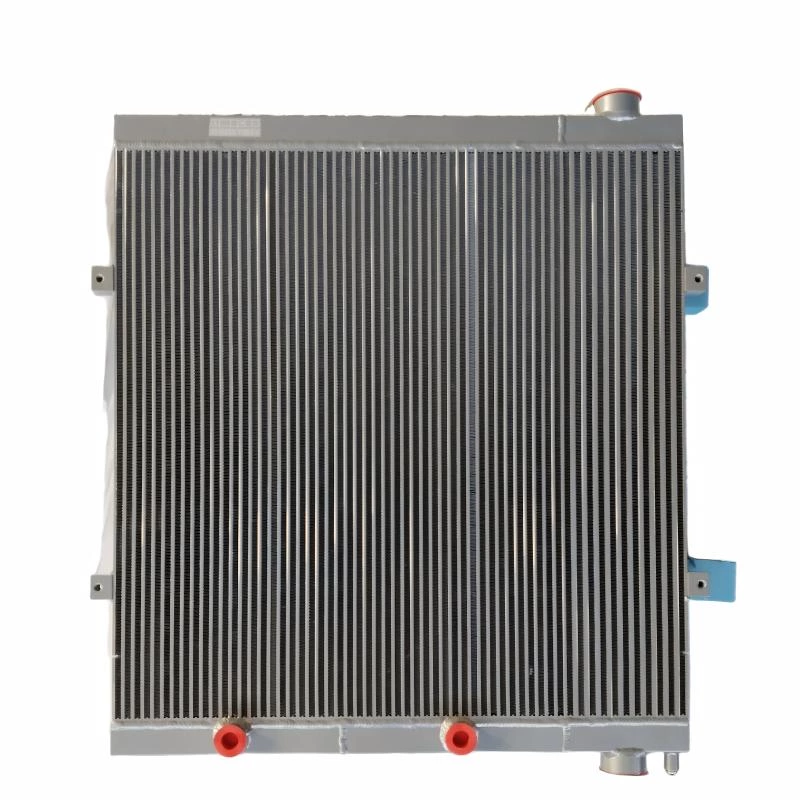
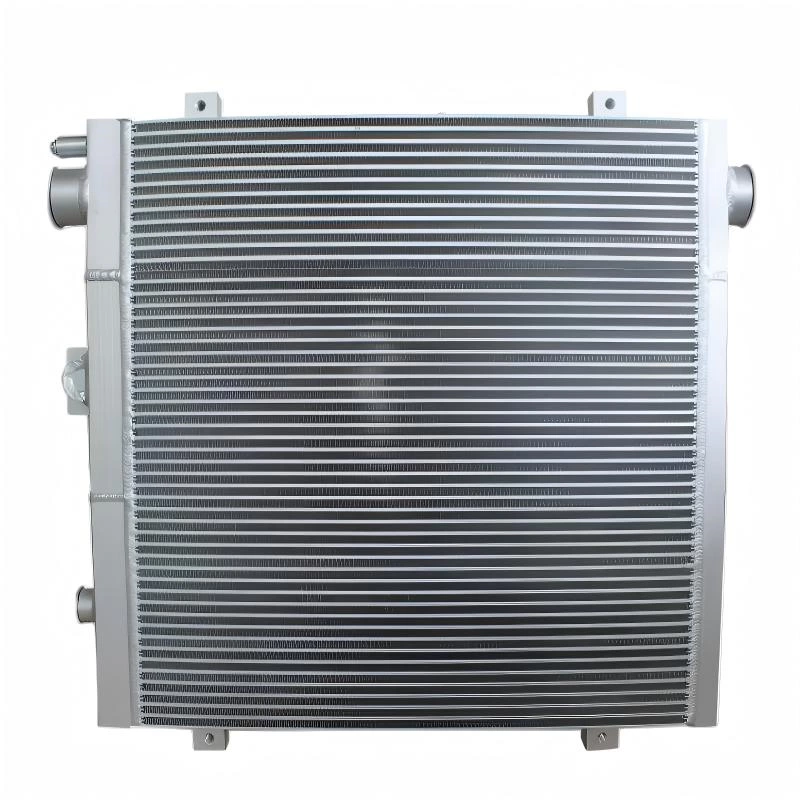
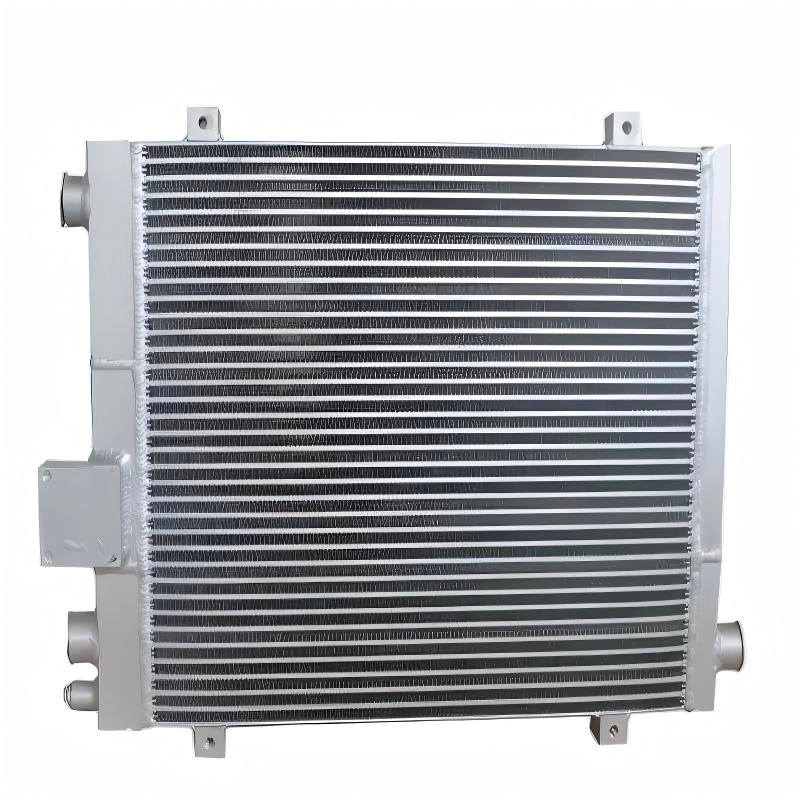
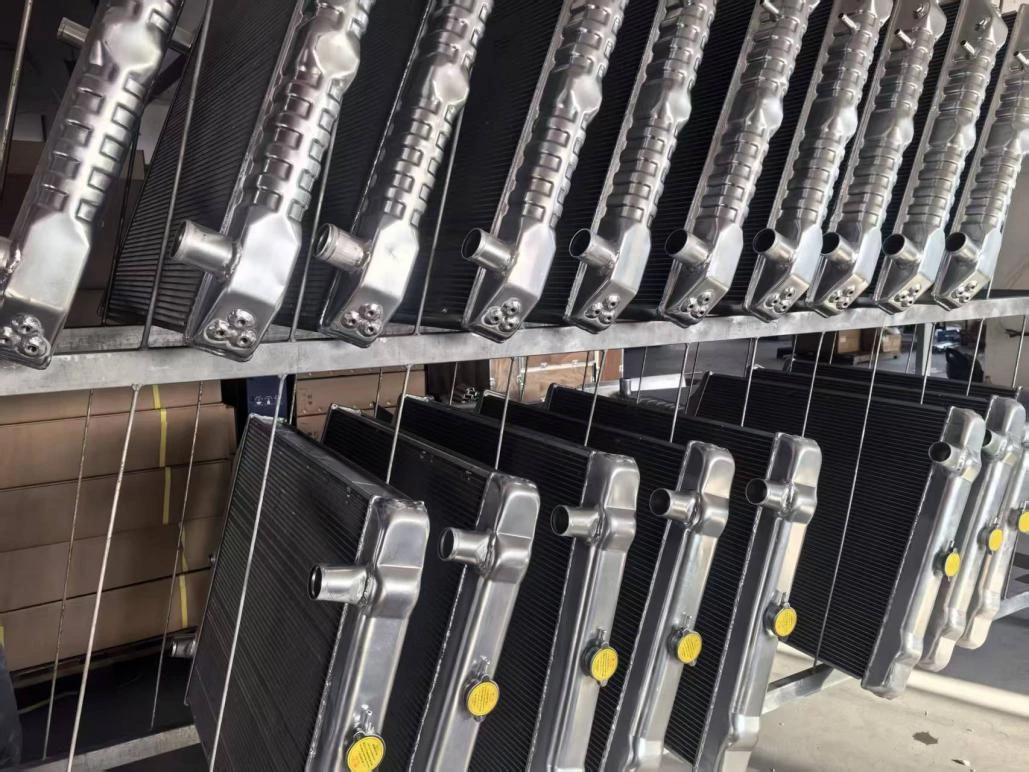
An excavator hydraulic radiator is a heat exchanger designed to remove excess heat from hydraulic oil. Unlike an engine radiator, which cools engine coolant, a hydraulic radiator is specifically used to cool hydraulic fluid circulating through the excavator’s hydraulic system.
In many excavators, the hydraulic radiator is integrated into a larger cooling module that may also include the engine radiator, intercooler, or other cooling components. Its purpose is to keep hydraulic oil within a suitable temperature range for stable performance, depending on system design and operating conditions.
Main Components of an Excavator Hydraulic Radiator
Although the exact design may vary, most excavator hydraulic radiators include the following main parts:
Core
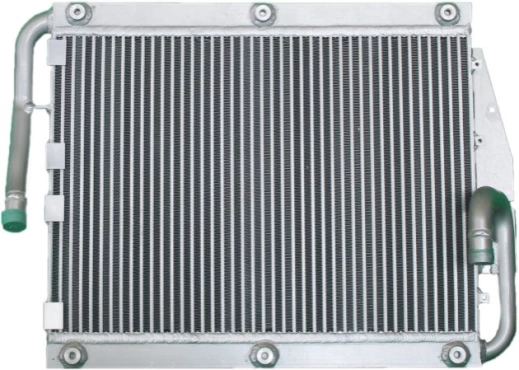
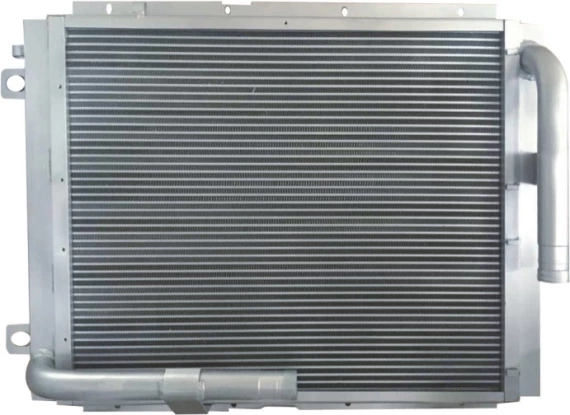
The core is the main heat exchange section of the radiator. It is often made of aluminum and may use a plate-fin structure to provide a large heat transfer area. Inside the core are oil flow passages, fins, and internal structures that help improve thermal performance.
Inlet and Outlet Tanks
Hot hydraulic oil enters the radiator through the inlet side, flows through the core, and exits through the outlet after heat has been removed.
Cooling Fins
Thin metal fins are positioned between the oil passages. These fins increase the surface area exposed to airflow and improve heat dissipation.
Cooling Fan
In air-cooled systems, a fan helps move ambient air across the radiator surface. This airflow carries heat away from the fins and core.
How Does an Excavator Hydraulic Radiator Work?
The working principle of an excavator hydraulic radiator is based on heat exchange between hot hydraulic oil and a cooling medium, usually air. During operation, hydraulic oil absorbs heat from pumps, valves, motors, and other hydraulic components. Once the oil returns through the cooling circuit, it flows into the hydraulic radiator.
Inside the radiator core, the hot oil passes through narrow internal channels designed to maximize contact with the metal heat transfer surfaces. As the oil moves through these passages, heat is transferred from the oil to the aluminum walls of the core.
The heat is then transferred from the metal surfaces to the attached fins. At the same time, air moves across the outside of the radiator core. This airflow may be created by a cooling fan, machine movement, or both. As air passes over the hot fins, it absorbs heat and carries it away from the radiator.
This process involves several stages of heat transfer:
- Heat moves from the hydraulic oil to the metal core surfaces
- Heat spreads through the core and fins
- Airflow removes the heat from the outside surface of the radiator
Because many excavator hydraulic radiators use a plate-fin structure, the internal design can improve turbulence and increase heat transfer efficiency. After cooling, the hydraulic oil exits the radiator and returns to the hydraulic tank or circulation system at a more controlled temperature. This continuous cooling cycle helps the excavator operate for long periods under heavy load.
Types of Excavator Hydraulic Cooling Systems
Air-Cooled Hydraulic Radiators
Air-cooled hydraulic radiators use ambient air and a fan to remove heat from the hydraulic oil. They are widely used in construction excavators because of their relatively simple structure, compact design, and lower maintenance requirements.
Water-Cooled Oil Coolers
Some specialized systems use water-cooled oil coolers, where heat is transferred from hydraulic oil to coolant instead of directly to air. These systems are less common in standard excavators but may be used in certain integrated cooling designs.
Why Proper Hydraulic Cooling Matters
Without effective cooling, excessive hydraulic oil temperature can lead to reduced viscosity, internal leakage, seal degradation, lower hydraulic efficiency, and even system shutdown. In severe cases, prolonged overheating may damage pumps, motors, and other hydraulic components.
A properly functioning excavator hydraulic radiator helps maintain stable hydraulic pressure, improve operating reliability, reduce downtime, and extend equipment service life.
Factors That Affect Excavator Hydraulic Radiator Performance
Several factors influence how efficiently an excavator hydraulic radiator performs:
- Ambient temperature
- Dust and debris accumulation on the core
- Cooling fan performance
- Hydraulic oil flow rate
- Radiator core material and design
- Available installation space
Machines working in mining, desert, or other high-temperature environments may require higher-capacity hydraulic radiators or reinforced cooling designs to maintain proper oil temperature.
Conclusion
An excavator hydraulic radiator works by removing excess heat from hydraulic oil through a continuous heat exchange process. Hot oil flows through the radiator core, heat moves into the metal surfaces and fins, and airflow carries that heat away before the oil returns to the hydraulic system.
In construction, mining, and other heavy-duty applications, proper hydraulic cooling is essential for maintaining efficiency, protecting components, and supporting uninterrupted operation. A well-designed excavator hydraulic radiator helps keep the system stable even under demanding working conditions.