Air Compressor Cooler vs Aftercooler: Functions, Applications, and Selection Guide
Compressed air systems generate a significant amount of heat during operation. As air is compressed, its temperature rises rapidly, placing additional stress on compressor components and reducing overall system efficiency. Effective cooling is therefore essential not only for protecting the compressor itself but also for maintaining compressed air quality and ensuring reliable downstream operation.
When evaluating cooling solutions, many engineers and equipment buyers encounter two commonly used terms: air compressor cooler and aftercooler. Although they are often discussed together, they serve different purposes within a compressed air system. Misunderstanding their functions can lead to improper equipment selection, increased operating costs, or reduced system performance.
This guide explains the differences between air compressor coolers and aftercoolers, how each works, where they are used, and how to choose the right solution for industrial applications.
What Is an Air Compressor Cooler?

An air compressor cooler is designed to remove heat generated during compressor operation. Depending on the compressor design, cooling may be applied to lubricating oil, compressed air, engine coolant, or multiple system components simultaneously.
In industrial compressors, excessive heat can negatively affect efficiency, accelerate component wear, and shorten equipment lifespan. A properly designed cooling system helps maintain stable operating temperatures, allowing the compressor to perform consistently under continuous load conditions.
Air compressor coolers are commonly found in:
- Stationary screw air compressors
- Portable air compressors
- Diesel-driven compressor units
- Industrial compressed air systems
- Mining and construction equipment
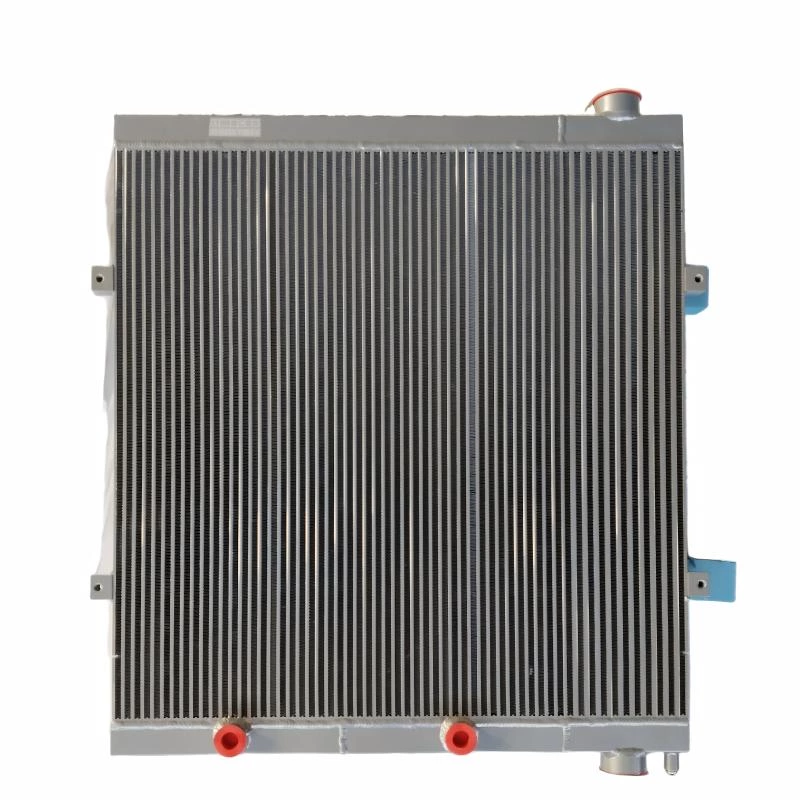
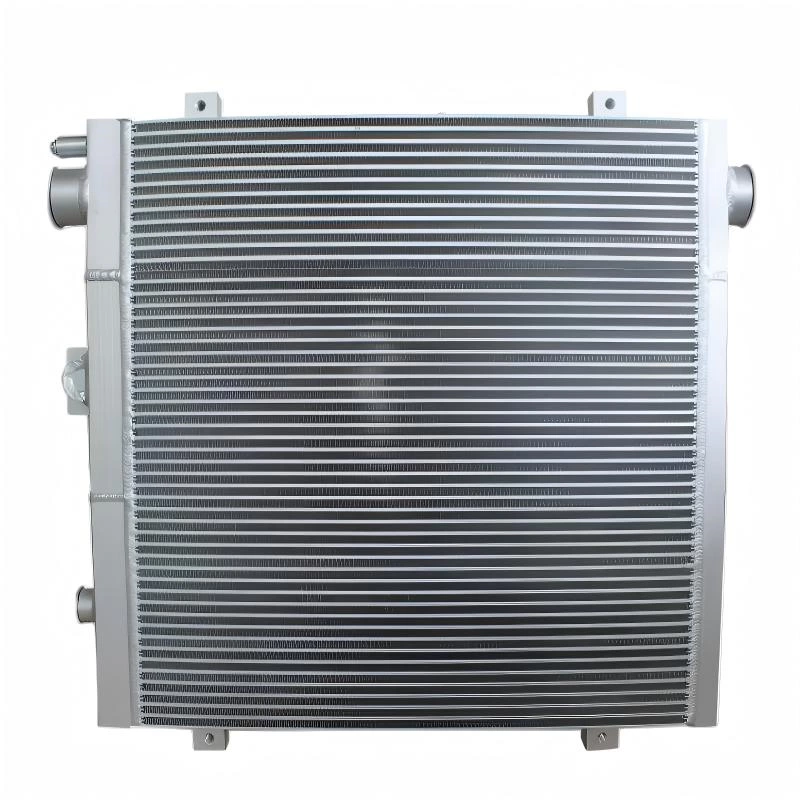
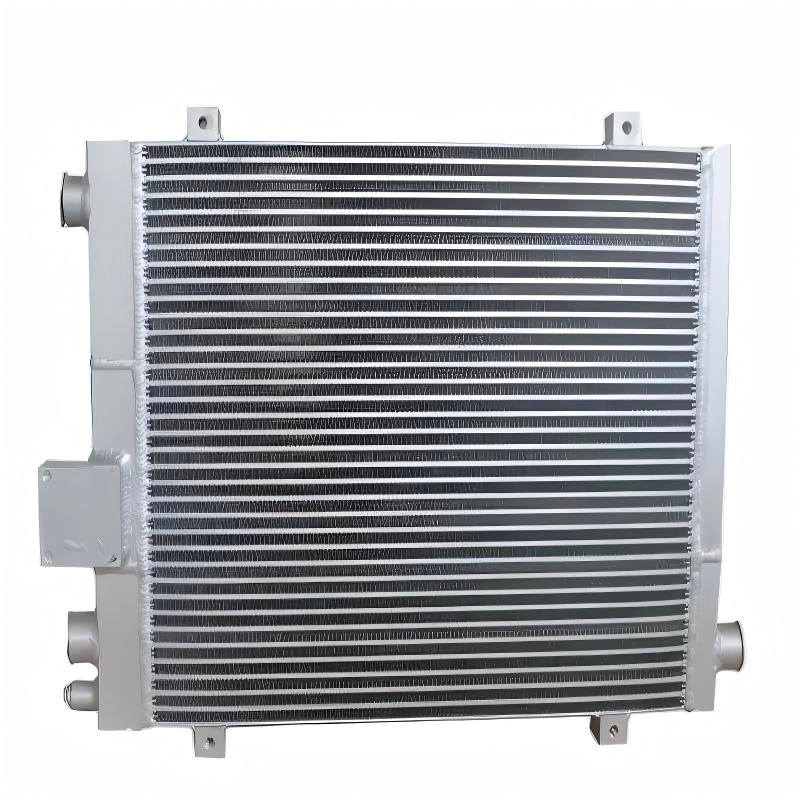
Most modern industrial compressor coolers use aluminum heat exchanger technology because of its high thermal conductivity, lightweight construction, and corrosion resistance.
Common Types of Air Compressor Coolers
| Cooler Type | Function |
|---|---|
| Oil Cooler | Removes heat from compressor lubricating oil |
| Air Cooler | Cools compressed air during operation |
| Water Cooler | Transfers heat through a water-based cooling circuit |
| Combined Cooler | Integrates multiple cooling functions in one unit |
The exact cooling configuration depends on compressor size, operating conditions, and application requirements.We support custom designs based on provided drawings. Please feel free to .
What Is an Aftercooler?
An aftercooler is installed downstream of the compressor discharge outlet and is specifically designed to cool compressed air before it enters storage tanks, dryers, filters, or production equipment.
When air leaves the compressor, it may reach temperatures exceeding 80°C to 120°C depending on system pressure and operating conditions. Hot compressed air contains a large amount of moisture vapor. As the air cools, this moisture condenses into liquid water, which can damage pneumatic tools, contaminate manufacturing processes, and accelerate corrosion inside air distribution systems.
The primary purpose of an aftercooler is to reduce compressed air temperature quickly and remove a significant portion of this moisture before the air reaches downstream equipment.
Typical benefits include:
- Reduced moisture content
- Improved compressed air quality
- Lower load on air dryers
- Protection of pneumatic equipment
- Reduced corrosion within air piping systems
Aftercoolers are widely used in manufacturing plants, food processing facilities, pharmaceutical production, automotive assembly lines, and other applications where compressed air quality is critical.
Air Compressor Cooler vs Aftercooler: Key Differences
Although both components help manage heat, they address different parts of the compressed air system.
| Feature | Air Compressor Cooler | Aftercooler |
|---|---|---|
| Primary Function | Cool compressor components | Cool compressed air |
| Cooling Target | Oil, coolant, internal air circuits | Discharge compressed air |
| Installation Location | Within compressor cooling system | After compressor outlet |
| Main Benefit | Protect equipment and improve efficiency | Reduce moisture and improve air quality |
| Impact on Compressor Life | Direct | Indirect |
| Impact on Air Quality | Limited | Significant |
| Typical Users | Compressor manufacturers and operators | Industrial air system users |
One common misconception is that an aftercooler can replace an air compressor cooler. In reality, these components perform different tasks and are often used together within the same system.
Do You Need Both an Air Compressor Cooler and an Aftercooler?
In many industrial applications, the answer is yes.
An air compressor cooler protects the compressor itself by controlling operating temperatures, while an aftercooler improves the condition of the compressed air leaving the system.
Removing one component often creates problems elsewhere.
For example, a compressor operating without sufficient cooling may experience:
- Higher oil temperatures
- Reduced efficiency
- Increased wear
- Shorter service intervals
Likewise, operating without an aftercooler can result in excessive moisture entering air receivers, piping networks, filters, and production equipment.
Large industrial compressor systems typically use multiple cooling stages to achieve both equipment protection and air quality control.
Rather than choosing one or the other, system designers generally evaluate how both technologies can work together to improve overall performance.
Applications of Air Compressor Coolers
| Industry/Application | Why Cooling Is Needed |
|---|---|
| Stationary Screw Air Compressors | Maintain stable operating temperature during continuous operation and reduce thermal stress on compressor components. |
| Portable Air Compressors | Ensure reliable performance in construction, mining, and outdoor environments with varying temperatures. |
| Manufacturing Facilities | Support continuous compressed air supply and minimize production downtime. |
| Mining & Heavy Equipment | Protect compressors from heat buildup under dusty, high-load operating conditions. |
| Energy & Industrial Processing | Improve efficiency and reliability in 24/7 industrial operations. |
Applications of Aftercoolers
| Industry/Application | Main Benefit of Aftercoolers |
|---|---|
| Manufacturing & Automation | Reduce moisture before compressed air enters pneumatic systems and production equipment. |
| Food & Beverage Processing | Improve compressed air quality and support hygiene requirements. |
| Pharmaceutical Production | Help maintain clean and stable compressed air for sensitive manufacturing processes. |
| Automotive & Industrial Assembly | Reduce moisture-related issues that may affect painting, tooling, and automation systems. |
| Air Receivers & Dryers | Lower inlet air temperature and reduce the workload on downstream air treatment equipment. |
How to Choose the Right Cooling Solution
Choosing the right cooling solution involves more than selecting a cooler that fits the available installation space. Compressor operating conditions, thermal load, environmental factors, and air quality requirements all influence long-term cooling performance. Understanding these factors helps engineers avoid undersized cooling systems and improve overall compressor reliability.
Evaluate the Compressor's Operating Conditions
The starting point is understanding how the compressor is used. A portable compressor operating intermittently on a construction site has very different cooling requirements from a stationary screw compressor running continuously in a manufacturing plant.
Factors such as compressor power, operating pressure, and duty cycle directly affect the amount of heat that must be removed. Systems operating under heavy loads for extended periods generally require larger cooling capacity and more efficient heat exchanger designs.
Consider the Working Environment
Environmental conditions can significantly influence cooling efficiency. High ambient temperatures reduce heat transfer performance, while dust, vibration, and restricted airflow can place additional stress on the cooling system.
For compressors installed in mining operations, construction projects, or outdoor industrial facilities, durability becomes just as important as cooling performance. Selecting a cooler designed for these conditions helps maintain stable operation and reduce maintenance requirements.
Define Air Quality Requirements
Not every application requires the same level of compressed air quality. In general manufacturing environments, the primary objective may be equipment protection. However, industries such as food processing, pharmaceuticals, and precision automation often require lower moisture levels and cleaner compressed air.
In these cases, an aftercooler is frequently used alongside the compressor cooling system to improve air quality and reduce the load on downstream dryers and filters.
Look Beyond Initial Cost
Cooling systems should be evaluated based on total lifecycle performance rather than purchase price alone. Factors such as maintenance frequency, corrosion resistance, energy efficiency, and service life often have a greater impact on long-term operating costs than the initial equipment investment.
A properly designed cooling solution can improve compressor reliability, extend component life, and reduce downtime over many years of operation.
Why Plate-Fin Coolers Are Widely Used in Air Compressor Systems
As compressor manufacturers continue to pursue higher performance and more compact equipment designs, traditional cooling technologies are increasingly being replaced by aluminum plate-fin heat exchangers. Their ability to deliver high cooling efficiency within a compact footprint makes them particularly attractive for modern compressor systems.

Efficient Heat Transfer in a Compact Space
One of the main advantages of a plate-fin cooler is the large heat transfer area created within a relatively small core volume. The dense fin structure increases thermal contact between airflow and the cooling medium, allowing more heat to be removed without significantly increasing cooler size.
This design is especially beneficial for compressor manufacturers looking to maximize cooling performance while minimizing equipment dimensions.
Designed for Demanding Operating Conditions
Industrial compressors are often exposed to challenging environments, including high temperatures, vibration, dust, and fluctuating loads. Under these conditions, cooling systems must maintain both thermal efficiency and structural integrity.
Brazed aluminum plate-fin cores offer excellent pressure resistance and durability, making them suitable for heavy-duty industrial applications where reliability is critical.
Long-Term Performance and Reliability
Cooling efficiency affects more than just operating temperature. Stable thermal management helps maintain lubricant performance, reduce component wear, and improve overall compressor efficiency.
For equipment owners, this often translates into longer service intervals, lower maintenance costs, and improved operational reliability. These benefits are a key reason why plate-fin coolers are widely used across stationary compressors, portable compressor systems, and industrial cooling applications.
Custom Air Compressor Cooler Solutions
No two compressor systems are exactly the same. Cooling requirements can vary significantly depending on operating conditions, equipment configuration, and environmental factors.
For industrial manufacturers and equipment builders, custom cooling solutions often provide better performance than standard off-the-shelf products.
Available Customization Options
Custom air compressor coolers can be designed based on:
- Cooling capacity requirements
- Core dimensions
- Airflow conditions
- Working pressure
- Connection configurations
- Mounting arrangements
- Material specifications
Industries Served
Custom cooling solutions are commonly supplied for:
- Air compressor manufacturers
- Industrial automation systems
- Mining equipment
- Construction machinery
- Transportation equipment
- Energy and power generation systems
By matching cooler design to actual operating conditions, manufacturers can improve thermal performance, increase equipment reliability, and optimize overall system efficiency.
We also offer replacement core bodies for sale, which is a cost-effective option. Support for customizing based on provided drawings. For specific quotations, please.
Conclusion
Although air compressor coolers and aftercoolers are both used to manage heat within compressed air systems, they perform fundamentally different functions.
Air compressor coolers help protect compressor components by controlling operating temperatures, improving efficiency, and extending equipment life. Aftercoolers focus on reducing compressed air temperature and moisture content before the air enters downstream systems.
In most industrial applications, these technologies work together rather than compete with each other. Understanding their respective roles allows engineers, equipment manufacturers, and facility operators to build more reliable and efficient compressed air systems.
When selecting a cooling solution, factors such as compressor size, operating environment, air quality requirements, and maintenance expectations should all be considered. A properly designed cooling system not only improves performance but also reduces operating costs and supports long-term equipment reliability.
If you are looking for a custom air compressor cooler solution, our engineering team can help evaluate your application and recommend a cooling system tailored to your operating requirements.
FAQ
What is the difference between an air compressor cooler and an aftercooler?
An air compressor cooler removes heat from compressor components such as oil, coolant, or internal air circuits, while an aftercooler cools compressed air after it leaves the compressor to reduce moisture and improve air quality.
Does an aftercooler replace an air compressor cooler?
No. These components perform different functions and are often used together in industrial compressed air systems.
Why does compressed air need cooling?
Compressed air becomes hot during the compression process. Cooling helps reduce moisture content, improve air quality, and protect downstream equipment.
Do all air compressors need an aftercooler?
Not all systems require an aftercooler, but it is highly recommended for applications where moisture control and compressed air quality are important.
How do I choose an air compressor cooler?
Key factors include compressor power, heat load, ambient temperature, duty cycle, installation space, and cooling performance requirements.
What industries use compressor aftercoolers?
Aftercoolers are widely used in manufacturing, food processing, pharmaceuticals, automotive production, industrial automation, and pneumatic systems.
Are plate-fin coolers suitable for air compressors?
Yes. Plate-fin coolers offer high heat transfer efficiency, compact design, pressure resistance, and long service life, making them widely used in modern compressor systems.
Can air compressor coolers be customized?
Yes. Custom solutions can be designed based on cooling capacity, dimensions, airflow requirements, working pressure, connection types, and installation conditions.