Air Compressor Aftercooler: Working Principle, Benefits & Applications
Compressed air is one of the most widely used power sources in modern industry. From manufacturing and mining to food processing and automated production lines, countless operations rely on a stable supply of clean, dry compressed air to keep equipment running efficiently.
However, the air leaving an air compressor is far from ready for use. During compression, atmospheric air is subjected to high pressure, causing its temperature to rise significantly while retaining a large amount of moisture in vapor form. If this hot compressed air is delivered directly into the air system, it can lead to condensation, corrosion, excessive wear of pneumatic components, and reduced performance of downstream treatment equipment.
This is why cooling is one of the first and most important steps in compressed air treatment. An air compressor aftercooler rapidly lowers the discharge temperature immediately after compression, creating the conditions needed for moisture separation and improving the overall efficiency of the compressed air system.
In this guide, you'll learn what an air compressor aftercooler is, how it works, why it is essential for industrial compressed air systems, and the key benefits and applications that make it an important part of modern air treatment.
Why Compressed Air Must Be Cooled Before It Can Be Used

Many people associate compressed air systems with pressure alone, assuming that once air has been compressed, it is ready for immediate use. In reality, pressure is only one part of the equation. Temperature and moisture content have an equally significant impact on system reliability, operating efficiency, and equipment life.
Before compressed air reaches storage tanks, dryers, filters, or production equipment, it must first be cooled to a suitable operating temperature. Understanding why this cooling stage is necessary helps explain the critical role of an air compressor aftercooler.
Compression Generates More Than Pressure
Whenever air is compressed into a smaller volume, mechanical energy is converted into heat. This is a natural result of the compression process and applies to virtually all industrial compressor types.
For most rotary screw compressors, discharge temperatures commonly range between 80°C and 120°C, while high-pressure or multi-stage compressors may operate at temperatures approaching 180°C or even higher, depending on system design and operating conditions.
The hotter the compressed air becomes, the greater its capacity to retain water vapor. Although the moisture is invisible at this stage, it remains suspended within the compressed air stream and travels throughout the entire system unless proper cooling is provided.
Moisture Becomes a Hidden Problem
Atmospheric air always contains some amount of humidity. During compression, this moisture is concentrated along with the air itself. Because the discharge temperature is high, the water remains in vapor form rather than immediately becoming liquid.
The problem begins when compressed air naturally cools inside pipelines, storage tanks, or downstream equipment. As the temperature drops below the dew point, water vapor condenses into liquid water.
If condensation occurs inside the compressed air network instead of inside dedicated treatment equipment, it can create a variety of operational problems, including:
- Internal corrosion of pipelines and air receivers
- Rust contamination throughout the compressed air system
- Reduced efficiency of pneumatic cylinders and valves
- Increased maintenance of filters and regulators
- Lower performance of refrigerated and desiccant dryers
- Product quality issues in industries requiring clean compressed air
These problems become increasingly serious in continuous-duty industrial environments where compressors operate for long periods every day.
High Temperature Affects the Entire Air Treatment System
Excessive discharge temperature does more than increase moisture. It also places unnecessary stress on every component located downstream of the compressor.
For example, refrigerated air dryers must remove additional heat before they can efficiently remove moisture. Filters operating at elevated temperatures may experience reduced service life, while seals, hoses, and lubricants are subjected to accelerated aging.
Higher air temperatures can also contribute to:
| System Impact | Potential Consequence |
|---|---|
| Increased thermal load | Reduced cooling efficiency |
| Higher moisture content | Greater condensate generation |
| Increased pressure loss | Higher compressor energy consumption |
| Faster component wear | More frequent maintenance |
| Reduced air quality | Lower production reliability |
Rather than treating these issues individually, industrial compressed air systems solve the problem at its source by cooling the compressed air immediately after it leaves the compressor.
Cooling Is the First Stage of Air Treatment
A common misconception is that compressed air becomes dry only after passing through an air dryer. In reality, moisture management begins much earlier.
A typical industrial compressed air system follows this sequence:
Air Compressor → Aftercooler → Moisture Separator → Air Receiver → Air Dryer → Filters → Point of Use
Each stage performs a different function.
The compressor generates compressed air.
The aftercooler removes heat.
The moisture separator removes condensed liquid water.
The air dryer eliminates the remaining water vapor.
Filters remove oil aerosols and fine particles before the compressed air reaches production equipment.
Because the aftercooler performs the initial cooling process, it significantly reduces the workload placed on every downstream component. Without effective cooling at this stage, the entire compressed air treatment system becomes less efficient.
What Is an Air Compressor Aftercooler?
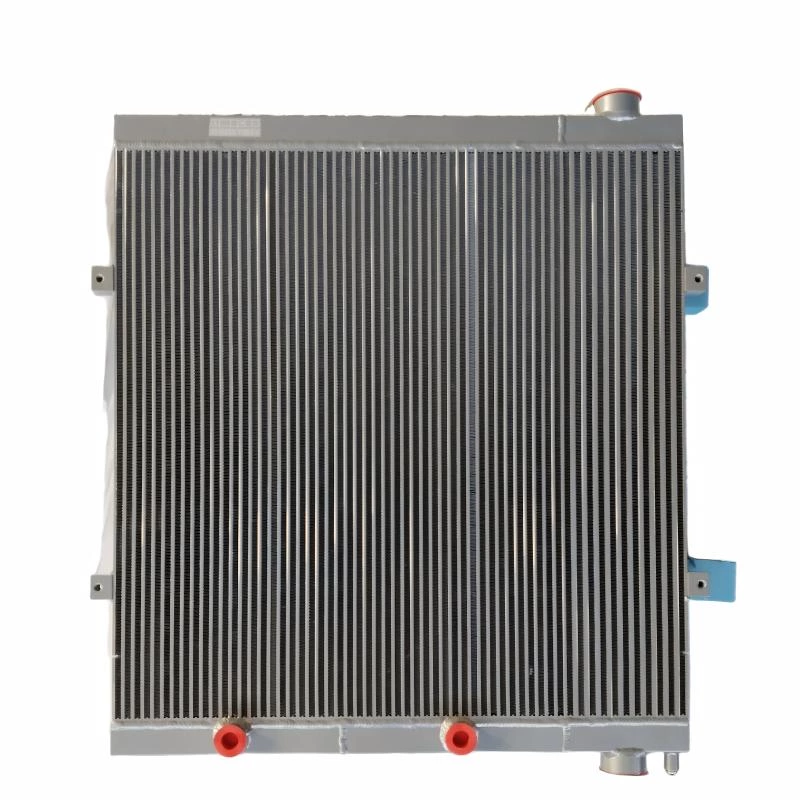
An air compressor aftercooler is a heat exchanger installed immediately downstream of an air compressor to reduce the temperature of compressed air before it enters the rest of the compressed air system.
Unlike an air dryer, which removes moisture vapor to achieve a specified pressure dew point, an aftercooler focuses on heat removal. By rapidly transferring heat from the compressed air to a cooling medium—either ambient air or circulating water—it lowers the discharge temperature and allows water vapor to condense into liquid.
This condensed water can then be removed by a moisture separator and automatic drain before the air reaches downstream equipment.
Because of this role, an aftercooler is widely regarded as the first stage of compressed air treatment rather than simply a cooling accessory.
More Than Just a Cooling Device
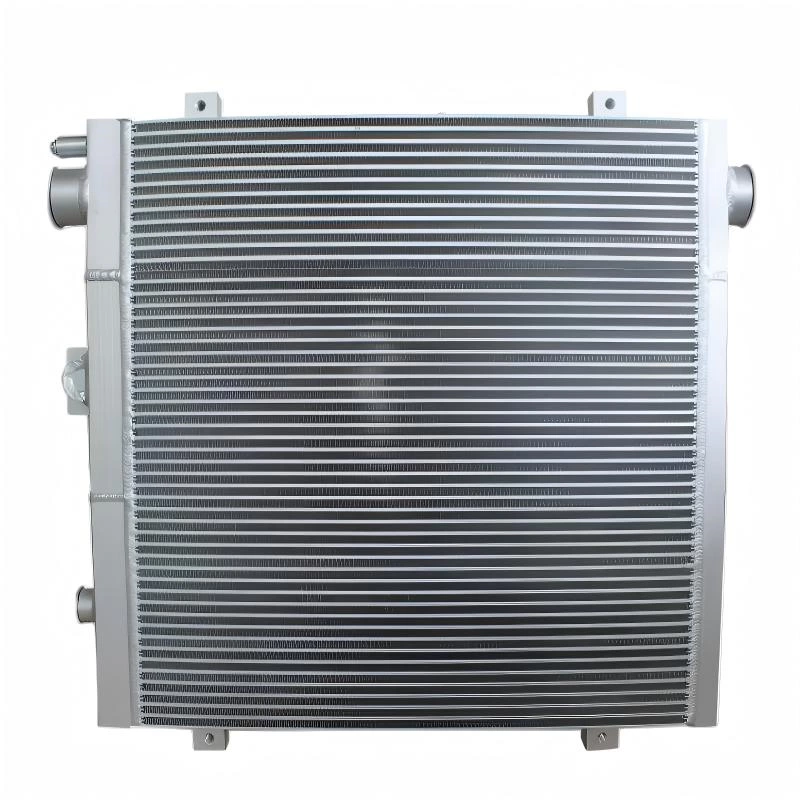
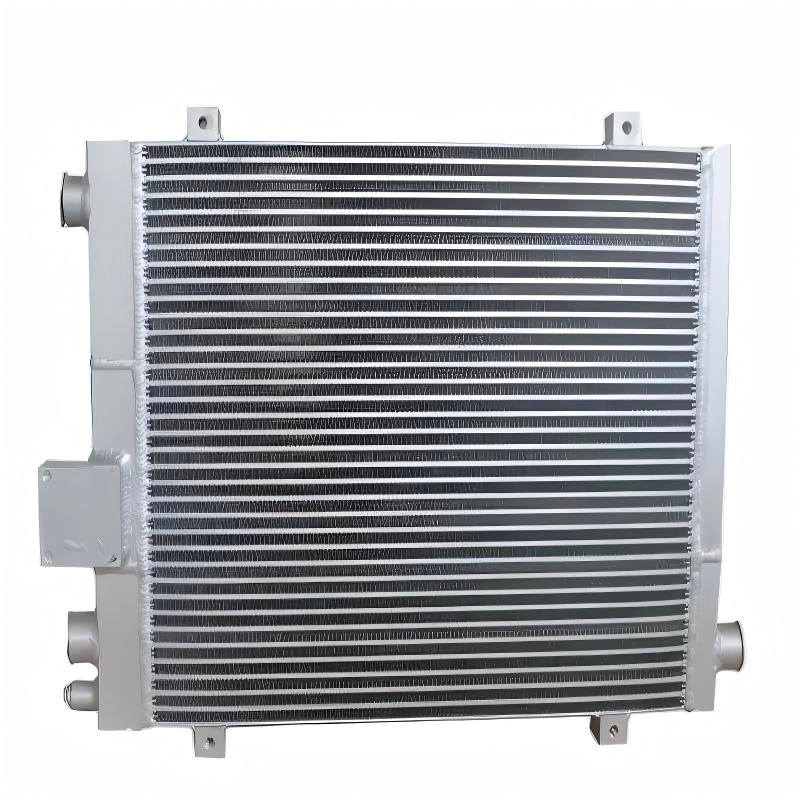
Although an air compressor aftercooler resembles an industrial radiator, its purpose extends well beyond temperature reduction.
A properly designed aftercooler helps create the operating conditions necessary for efficient compressed air treatment by:
- Lowering compressed air temperature immediately after compression
- Promoting moisture condensation before the air enters storage tanks or dryers
- Reducing the thermal load on refrigerated or desiccant dryers
- Protecting filters, valves, and pneumatic equipment from excessive heat
- Improving the stability and reliability of the compressed air system
In continuous industrial applications, these improvements can translate into lower maintenance requirements, longer equipment life, and more consistent production performance.
Main Components of an Air Compressor Aftercooler
Although designs vary depending on cooling method and operating conditions, most industrial air compressor aftercoolers consist of several key components that work together to remove heat and manage moisture.
| Component | Primary Function |
|---|---|
| Heat exchanger core | Transfers heat from compressed air to the cooling medium |
| Cooling fins | Increase the effective heat transfer surface area |
| Fan or water circuit | Carries heat away from the heat exchanger |
| Moisture separator | Removes condensed liquid water from the airflow |
| Automatic drain | Discharges collected condensate automatically |
| Protective frame or housing | Supports and protects the complete assembly |
Today, many industrial aftercoolers use aluminum plate-fin heat exchanger cores because they offer high thermal efficiency, compact dimensions, low weight, and excellent resistance to vibration and corrosion compared with conventional tube-fin designs.
Where Is an Air Compressor Aftercooler Installed?
The location of an air compressor aftercooler is just as important as its cooling performance. Even a high-efficiency heat exchanger cannot deliver its full benefits if it is installed in the wrong position within the compressed air system.
In most industrial applications, the aftercooler is installed immediately downstream of the air compressor discharge outlet and before the air receiver, air dryer, and filtration system.
A typical compressed air treatment process follows this sequence:
Air Compressor → Aftercooler → Moisture Separator → Air Receiver → Air Dryer → Filters → Point of Use
This arrangement allows the hottest compressed air to be cooled as early as possible, encouraging water vapor to condense into liquid before the air enters downstream equipment.
By removing heat at the beginning of the treatment process, the aftercooler helps reduce the workload on air dryers and minimizes the amount of moisture circulating through the compressed air network.
Why Is This Installation Position Important?
Installing the aftercooler directly after the compressor provides several advantages:
- Maximizes cooling efficiency while the temperature difference is greatest
- Reduces the amount of condensate entering storage tanks
- Improves the performance of refrigerated and desiccant dryers
- Protects filters, valves, and pneumatic components from excessive heat
- Reduces corrosion throughout the compressed air distribution system
For continuous-duty industrial compressors, this configuration has become the standard practice because it improves both system efficiency and long-term equipment reliability.
How Does an Air Compressor Aftercooler Work?
Although an air compressor aftercooler appears to be a relatively simple heat exchanger, its operation is based on several closely connected processes. Cooling the compressed air is only the first step. The ultimate goal is to remove heat, promote moisture condensation, and prepare the air for efficient downstream treatment.
The complete process can be understood in five stages.

Step 1 – Hot Compressed Air Enters the Aftercooler
Immediately after compression, the air exits the compressor at a high temperature while carrying a significant amount of water vapor.
At this stage, the moisture is still suspended as vapor because the air temperature remains above its dew point. If this hot air were allowed to travel directly through the compressed air network, condensation would occur inside pipelines and equipment rather than in a controlled location.
Step 2 – Heat Is Transferred Through the Heat Exchanger
The compressed air flows through the heat exchanger core, where thermal energy is transferred to the surrounding cooling medium.
Depending on the system design, the cooling medium may be:
- Ambient air circulated by cooling fans
- Cooling water supplied through a closed-loop system
During this process, the temperature of the compressed air drops rapidly while the cooling medium carries the heat away.
The efficiency of this heat transfer depends on several factors, including:
- Heat exchanger surface area
- Fin design
- Airflow or water flow rate
- Temperature difference between compressed air and the cooling medium
- Thermal conductivity of the core material
Modern aluminum plate-fin heat exchangers are widely used because they provide a large heat transfer area within a compact structure while maintaining excellent thermal efficiency.
Step 3 – Moisture Condenses
As the compressed air cools, its ability to retain water vapor decreases.
Once the temperature reaches the dew point, excess moisture changes from vapor into tiny liquid droplets. This phase change is one of the most important functions of an aftercooler because liquid water is much easier to remove than water vapor.
Instead of allowing condensation to occur randomly throughout the compressed air system, the aftercooler creates a controlled environment where moisture can be collected efficiently.
Step 4 – Condensed Water Is Removed
After leaving the heat exchanger, the cooled compressed air enters a moisture separator.
Here, centrifugal force or changes in airflow direction separate water droplets from the air stream. The collected condensate is then discharged through an automatic drain.
Removing liquid water at this stage significantly reduces the moisture load entering downstream equipment such as air receivers, dryers, filters, and pneumatic machinery.
Step 5 – Conditioned Air Continues Through the System
Once the compressed air has been cooled and the majority of liquid water has been removed, it continues through the remaining stages of the compressed air treatment system.
Depending on the application, these stages may include:
- Air receiver tanks
- Refrigerated air dryers
- Desiccant dryers
- Coalescing filters
- Activated carbon filters
- Point-of-use filtration
Because the aftercooler has already removed a large portion of the heat and condensed moisture, each downstream component can operate more efficiently while consuming less energy.
Air-Cooled vs Water-Cooled Aftercoolers
Industrial air compressor aftercoolers generally use either ambient air or cooling water as the heat transfer medium. Both designs perform the same basic function, but each offers advantages under different operating conditions.
| Feature | Air-Cooled Aftercooler | Water-Cooled Aftercooler |
|---|---|---|
| Cooling medium | Ambient air | Cooling water |
| Installation | Simple | Requires water circuit |
| Operating cost | Lower | Higher |
| Cooling performance | Depends on ambient temperature | Stable under heavy loads |
| Maintenance | Fan and fin cleaning | Water circuit maintenance |
| Typical applications | General manufacturing, portable compressors | Heavy industry, continuous production |
Air-cooled aftercoolers are commonly selected for their simple installation and low operating cost, making them suitable for most industrial facilities.
Water-cooled designs, on the other hand, provide more consistent cooling where ambient temperatures are high or compressor systems operate continuously under heavy loads.
Selecting between the two should be based on operating conditions rather than compressor size alone.
Why an Aftercooler Cannot Replace an Air Dryer
One of the most common misconceptions is that an aftercooler eliminates the need for an air dryer. Although both devices contribute to improving compressed air quality, they perform very different functions.
An aftercooler removes heat, while an air dryer removes remaining water vapor.
After cooling, a significant portion of moisture condenses into liquid water and can be separated mechanically. However, some water vapor always remains in the compressed air.
Applications such as food processing, pharmaceutical manufacturing, electronics production, spray painting, and precision instrumentation often require extremely low pressure dew points that only a refrigerated or desiccant dryer can achieve.
The two components should therefore be viewed as complementary rather than interchangeable.
| Function | Aftercooler | Air Dryer |
|---|---|---|
| Reduces compressed air temperature | ✔ | ✖ |
| Promotes moisture condensation | ✔ | ✖ |
| Removes condensed liquid water | ✔ (with separator) | ✖ |
| Removes remaining water vapor | ✖ | ✔ |
| Lowers pressure dew point | ✖ | ✔ |
| Protects downstream equipment | ✔ | ✔ |
In most industrial compressed air systems, the best performance is achieved when an aftercooler and an air dryer work together as part of a complete air treatment solution.
Key Benefits of Using an Air Compressor Aftercooler
Installing an air compressor aftercooler delivers benefits that extend beyond temperature reduction. By removing heat at the earliest stage of compressed air treatment, it improves the performance of the entire system.
Improved Moisture Management
Cooling promotes condensation, allowing moisture separators to remove liquid water before it reaches downstream equipment.

Higher Air Quality
Lower temperatures and reduced moisture help create cleaner compressed air, supporting stable operation in demanding industrial environments.
Better Dryer Performance
By reducing the inlet temperature, aftercoolers decrease the cooling load placed on refrigerated and desiccant dryers, improving their operating efficiency.
Longer Equipment Life
Lower operating temperatures reduce thermal stress on filters, seals, valves, pneumatic cylinders, and other components, extending their service life.
Lower Maintenance Costs
Removing heat and moisture before they spread throughout the compressed air network helps reduce corrosion, contamination, and unplanned maintenance.
Typical Industrial Applications
Air compressor aftercoolers are widely used wherever compressed air systems operate continuously or where air quality directly affects production.
Common applications include:
- Manufacturing and automated production lines
- Mining and quarry operations
- Construction equipment
- Food and beverage processing
- Pharmaceutical manufacturing
- Chemical processing plants
- Automotive production
- Textile manufacturing
- Metal fabrication
- General industrial compressed air systems
Although operating conditions differ between industries, the objective remains the same: reduce compressed air temperature, improve moisture control, and protect downstream equipment.
Frequently Asked Questions
What does an air compressor aftercooler do?
It cools compressed air immediately after compression, allowing heat to dissipate and moisture to condense before the air enters downstream treatment equipment.
Does an aftercooler remove moisture?
Yes, but only the moisture that condenses into liquid after cooling. Remaining water vapor is typically removed by an air dryer.
Can an aftercooler replace an air dryer?
No. An aftercooler reduces temperature and promotes condensation, while an air dryer removes the remaining water vapor to achieve the required air quality.
Where should an air compressor aftercooler be installed?
It is generally installed immediately after the compressor discharge and before the air receiver or air dryer.
Which is better, an air-cooled or water-cooled aftercooler?
The choice depends on operating conditions, ambient temperature, cooling water availability, and required cooling performance.
Conclusion
An air compressor aftercooler is far more than a cooling accessory. It is a critical component in modern compressed air treatment systems, helping reduce discharge temperatures, promote moisture separation, protect downstream equipment, and improve the efficiency of the entire compressed air network.
Whether used in manufacturing, construction, mining, food processing, or other industrial applications, selecting the appropriate aftercooler and integrating it correctly into the compressed air system can significantly improve reliability while reducing long-term operating costs.
For applications requiring durable, high-efficiency cooling, aluminum plate-fin air compressor aftercoolers offer an excellent balance of thermal performance, compact design, and corrosion resistance. When combined with proper system design and regular maintenance, they provide a dependable solution for demanding industrial environments.