How to Choose the Right Air Compressor Aftercooler for Industrial Applications
Selecting an air compressor aftercooler is not simply a matter of matching compressor power or pipe size. In industrial compressed air systems, cooling performance depends on multiple operating conditions, including airflow, working pressure, discharge temperature, ambient environment, and duty cycle. Overlooking any of these factors can reduce cooling efficiency and increase operating costs.

A common misconception is that a larger aftercooler always provides better performance. In reality, an oversized unit may increase installation costs without delivering meaningful efficiency gains, while an undersized unit may struggle to remove heat, allowing excessive moisture to reach downstream equipment. Either situation can negatively affect system reliability.
For engineers, OEM manufacturers, and maintenance teams, selecting the right aftercooler means balancing thermal performance, pressure loss, installation requirements, and long-term operating costs.
This guide explains the key engineering considerations involved in selecting an air compressor aftercooler and highlights the common mistakes that often lead to poor cooling performance.
Why Choosing the Right Aftercooler Matters
Many compressed air cooling problems are not caused by manufacturing defects but by incorrect equipment selection.
An aftercooler is designed to remove heat generated during compression, allowing moisture to condense before the compressed air reaches storage tanks, dryers, filters, and pneumatic equipment. However, if the aftercooler is incorrectly selected, even a well-manufactured heat exchanger may fail to achieve the desired cooling performance.
Improper selection can affect not only the aftercooler itself but also the efficiency of the entire compressed air treatment system. Excessive outlet temperatures increase the workload of refrigerated dryers, higher pressure losses force compressors to consume more energy, and insufficient moisture removal accelerates corrosion and equipment wear.
Instead of focusing only on the purchase price or compressor horsepower, engineers should evaluate the complete operating environment before selecting an aftercooler.
Typical Problems Caused by Incorrect Selection
| Selection Issue | Possible Consequences |
|---|---|
| Cooling capacity too small | High outlet air temperature |
| Pressure rating too low | Reduced operating safety |
| Incorrect cooling method | Poor cooling efficiency |
| High pressure drop | Increased compressor energy consumption |
| Improper installation | Uneven airflow and reduced cooling performance |
| Inadequate condensate drainage | Moisture entering downstream equipment |
Selecting the correct aftercooler at the beginning of a project helps improve compressed air quality while reducing long-term maintenance and operating costs.
Step 1 – Understand Your Compressor Operating Conditions
Choosing the right aftercooler starts with understanding how the compressor actually operates. Compressor specifications alone do not provide enough information to determine cooling requirements.
Before selecting any cooling equipment, engineers should evaluate the complete operating conditions of the compressed air system.
Airflow Is More Important Than Compressor Power
One of the most common mistakes is selecting an aftercooler based only on compressor horsepower.
While motor power indicates the amount of energy required to drive the compressor, it does not directly determine the amount of compressed air that must be cooled.
Instead, the primary sizing parameter is airflow, typically expressed in:
- CFM (Cubic Feet per Minute)
- m³/min
- SCFM
Higher airflow means a greater volume of compressed air passes through the heat exchanger every minute, increasing the amount of heat that must be removed.
For this reason, two compressors with the same motor power may require different aftercooler capacities if their airflow rates differ.
When evaluating product specifications, airflow should always be considered before compressor power.
Understand Working Pressure Before Selecting an Aftercooler
Working pressure influences both safety and structural design.
Industrial compressors operate under a wide range of pressures depending on their applications. Portable construction compressors, rotary screw compressors, and high-pressure systems each require aftercoolers capable of safely handling their respective operating pressures.
Selecting an aftercooler with an insufficient pressure rating may reduce reliability and increase safety risks, while selecting one with excessive pressure capacity may unnecessarily increase system cost.
The working pressure of the entire compressed air system—including future operating conditions—should therefore be confirmed before selecting any heat exchanger.
Compressor Type Influences Cooling Requirements
Different compressor technologies generate different thermal characteristics.
For example:
Rotary Screw Compressors
These compressors typically operate continuously and generate a relatively stable heat load, making them suitable for continuous-duty aftercoolers with consistent cooling performance.
Piston Compressors
Piston compressors often operate intermittently. Although their average heat load may be lower, discharge temperatures can fluctuate significantly during each compression cycle.
Portable Diesel Compressors
Portable compressors are frequently used outdoors under dusty, high-temperature conditions. In these environments, aftercoolers must withstand vibration, contamination, and changing ambient temperatures while maintaining reliable cooling performance.
Understanding the compressor type helps determine the most appropriate heat exchanger design and cooling method.
Continuous Operation Requires Different Cooling Strategies
Another factor often overlooked during equipment selection is the compressor duty cycle.
Some compressors operate only a few hours each day, while others run continuously throughout multiple production shifts.
Continuous-duty systems generate a sustained thermal load that places greater demands on the aftercooler.
When evaluating continuous industrial applications, engineers should consider:
- Operating hours per day
- Seasonal temperature variations
- Peak production periods
- Future capacity expansion
- Maintenance intervals
Selecting an aftercooler that matches both current and future operating requirements helps improve long-term reliability and reduces the likelihood of premature equipment replacement.
Ambient Temperature Directly Affects Cooling Performance
The surrounding environment plays a significant role in aftercooler performance.
Air-cooled aftercoolers rely on the temperature difference between compressed air and ambient air. As ambient temperatures rise, this temperature difference decreases, reducing the heat transfer efficiency of the system.
Facilities located in tropical climates, steel plants, mining sites, or poorly ventilated workshops often experience significantly higher ambient temperatures than standard design conditions.
When selecting an aftercooler, engineers should evaluate:
- Average ambient temperature
- Maximum summer temperature
- Ventilation conditions
- Dust concentration
- Available installation space
Ignoring these environmental factors may result in lower-than-expected cooling performance, even when the aftercooler itself is correctly sized.
Step 2 – Determine the Required Cooling Performance
Once the operating conditions have been identified, the next step is determining how much cooling performance the aftercooler must provide. This is one of the most overlooked aspects of equipment selection, yet it has a direct impact on compressed air quality, downstream equipment protection, and overall system efficiency.
Many buyers assume that compressor power alone determines aftercooler size. In reality, cooling performance is influenced by the amount of heat that must be removed under actual operating conditions.
Cooling Capacity Depends on Heat Load, Not Compressor Horsepower
Compressor horsepower indicates how much power is required to compress the air, but it does not accurately represent the thermal load placed on the aftercooler.
The amount of heat that must be removed depends on several operating variables working together.
These include:
- Compressed air flow rate
- Compressor discharge temperature
- Required outlet air temperature
- Working pressure
- Ambient temperature
A compressor operating in a hot outdoor environment may require significantly greater cooling capacity than an identical compressor installed inside a temperature-controlled facility.
Define the Desired Outlet Temperature
Another important consideration is the target outlet temperature.
In most industrial systems, the objective is not to cool compressed air to the lowest possible temperature, but to reduce it close to the surrounding ambient temperature.
Lower outlet temperatures provide several advantages:
- Increase moisture condensation
- Improve air dryer efficiency
- Reduce thermal stress on downstream equipment
- Improve compressed air quality
However, pursuing unnecessarily low temperatures may increase equipment size and operating costs without delivering proportional system benefits.
Understand Heat Transfer Efficiency
The cooling performance of an aftercooler depends on how efficiently heat is transferred from the compressed air to the cooling medium.
Several factors influence heat transfer efficiency, including:
| Design Factor | Influence on Cooling Performance |
|---|---|
| Heat exchanger surface area | Larger area improves heat transfer |
| Air or water flow rate | Higher flow removes heat more effectively |
| Temperature difference | Greater difference increases cooling efficiency |
| Core material | High thermal conductivity improves performance |
| Fin design | Optimized fins increase effective cooling area |
Rather than focusing on a single specification, engineers should evaluate these factors together to achieve balanced system performance.
Balance Cooling Performance and Energy Efficiency
Selecting the largest available aftercooler does not necessarily produce the best result.
A properly matched cooling system should achieve the required outlet temperature while maintaining low pressure loss, reasonable equipment size, and efficient energy consumption.
Effective aftercooler selection is therefore about optimization rather than maximum cooling capacity.
Step 3 – Choose the Right Cooling Method
Once the required cooling capacity has been determined, the next decision is selecting the most appropriate cooling method.

Industrial air compressor aftercoolers generally use either ambient air or circulating water to remove heat. Both solutions provide reliable cooling performance, but the best choice depends on the operating environment, cooling requirements, and available utilities.
| Comparison Item | Air-Cooled Aftercooler | Water-Cooled Aftercooler |
|---|---|---|
| Cooling Medium | Ambient air | Circulating cooling water |
| Installation | Simple and easy to install | Requires a cooling water system |
| Operating Cost | Lower | Moderate |
| Cooling Performance | Depends on ambient temperature | Stable under high thermal loads |
| Maintenance | Mainly fan and fin cleaning | Water circuit maintenance required |
| Typical Applications | Manufacturing, workshops, portable compressors | Steel plants, petrochemical facilities, power stations |
| Best For | General industrial applications | Continuous-duty and high-temperature environments |
Which Cooling Method Should You Choose?
Neither cooling method is universally better. Air-cooled aftercoolers are preferred for their simple installation and lower operating costs, making them suitable for most industrial applications. Water-cooled aftercoolers, however, deliver more stable cooling performance in high-temperature environments or continuous-duty operations where consistent heat removal is essential.
When making a selection, engineers should consider not only the initial equipment cost but also long-term operating efficiency, maintenance requirements, available utilities, and overall system reliability.
Step 4 – Select the Appropriate Heat Exchanger Design
Once the operating conditions and cooling requirements have been defined, the next step is selecting the most suitable heat exchanger design. Different core structures provide different levels of heat transfer efficiency, durability, weight, and installation flexibility.
Although several heat exchanger technologies are available for compressed air cooling, plate-fin and tube-fin designs are the two most common choices for industrial aftercoolers.
Plate-Fin Heat Exchangers
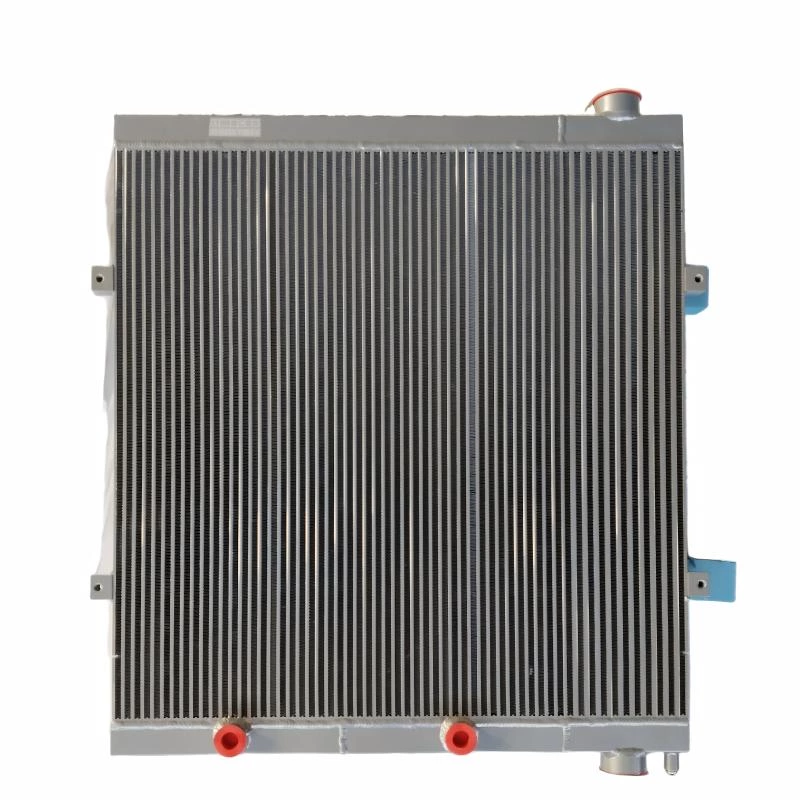
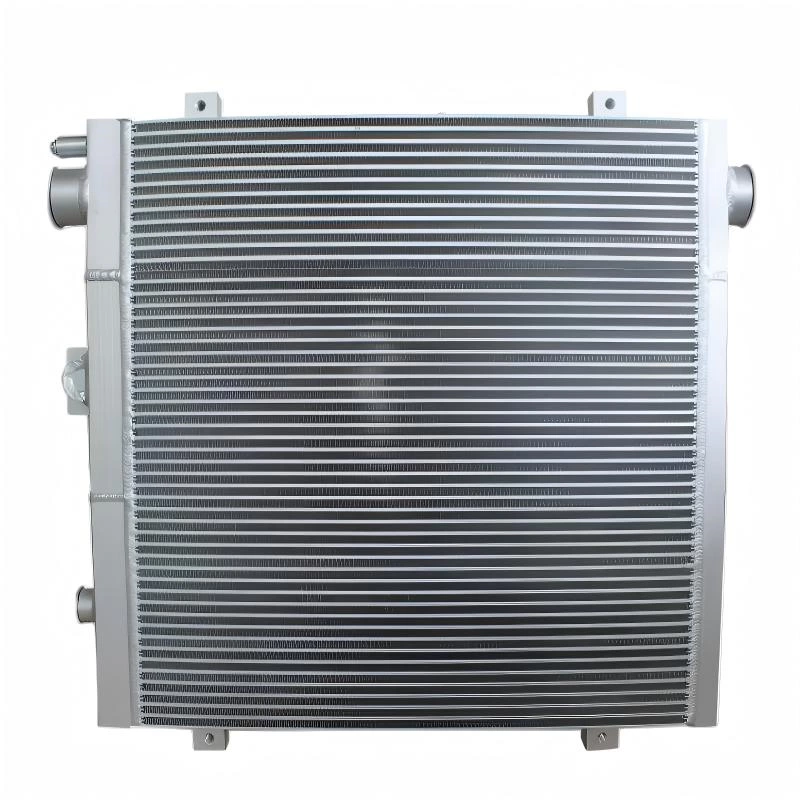
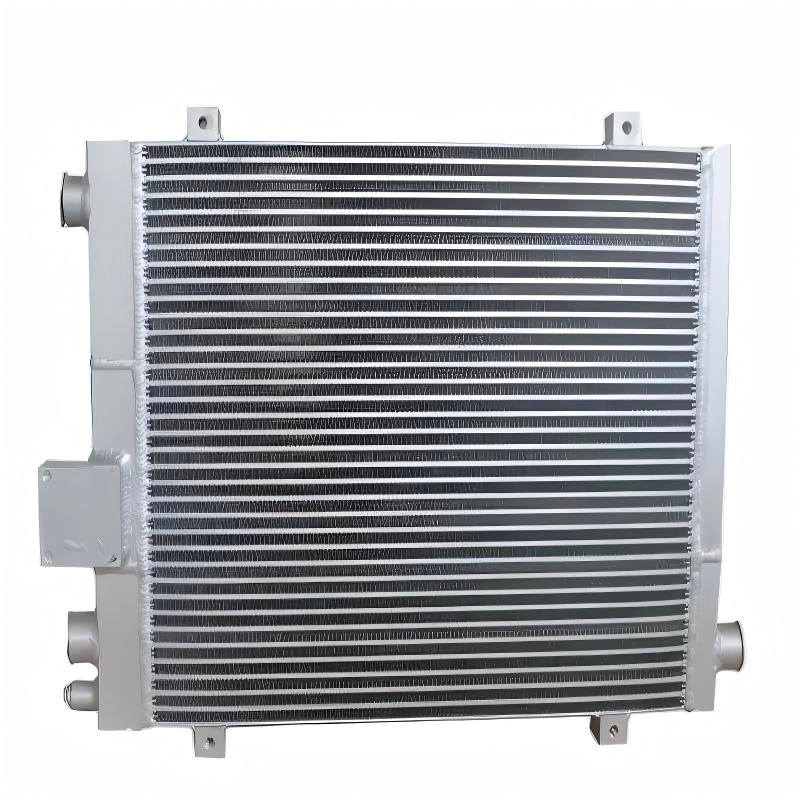
Plate-fin heat exchangers consist of multiple aluminum plates and corrugated fins that create a large heat transfer surface within a compact structure.
Their advantages include:
- High heat transfer efficiency
- Compact dimensions
- Lightweight construction
- Excellent vibration resistance
- Lower airflow resistance
- Suitable for continuous industrial operation
Because of these characteristics, aluminum plate-fin aftercoolers are widely used in rotary screw compressors, construction machinery, mining equipment, and OEM compressed air systems.
Tube-Fin Heat Exchangers
Tube-fin designs transfer heat through tubes surrounded by cooling fins.
They have been used for many years and remain suitable for certain industrial applications where installation space is less restricted.
However, compared with plate-fin designs, tube-fin heat exchangers generally require a larger installation footprint to achieve similar cooling performance.
Comparison of Heat Exchanger Designs
| Feature | Plate-Fin | Tube-Fin |
|---|---|---|
| Heat transfer efficiency | Excellent | Good |
| Installation size | Compact | Larger |
| Weight | Lightweight | Heavier |
| Vibration resistance | Excellent | Moderate |
| OEM applications | Widely used | Limited applications |
Selecting the appropriate core structure depends on cooling requirements, installation constraints, and operating conditions rather than cost alone.
Step 5 – Don't Ignore Pressure Drop
Cooling performance is often the first specification buyers compare, but pressure drop is equally important.
Every heat exchanger creates some resistance as compressed air passes through its internal flow passages. If this resistance becomes excessive, the compressor must work harder to maintain system pressure, increasing overall energy consumption.
An aftercooler with extremely high cooling efficiency but excessive pressure loss may actually reduce the overall efficiency of the compressed air system.
Why Pressure Drop Matters
Higher pressure losses can lead to:
- Increased compressor power consumption
- Reduced airflow to downstream equipment
- Lower production efficiency
- Higher operating costs
- Reduced system stability
A well-designed aftercooler should balance heat transfer efficiency with optimized airflow, maintaining effective cooling while minimizing pressure loss.
Factors Affecting Pressure Drop
Several design factors influence pressure drop, including:
- Internal flow channel design
- Core geometry
- Fin density
- Airflow velocity
- Connection size
- System cleanliness
Regular maintenance also plays an important role. Dust accumulation on cooling fins or contamination inside the heat exchanger may gradually increase airflow resistance over time.
Step 6 – Consider Installation and Operating Environment
Even a correctly sized aftercooler may fail to deliver its expected performance if the installation environment is not considered during equipment selection.
Operating conditions vary significantly between industries, and environmental factors often influence cooling performance as much as the heat exchanger itself.
Indoor and Outdoor Installation
Outdoor installations expose aftercoolers to direct sunlight, rain, dust, and seasonal temperature changes.
Indoor systems may experience limited ventilation, especially in enclosed compressor rooms where ambient temperatures continue to rise during operation.
Both situations should be considered when selecting cooling capacity.
Dust and Contamination
Industries such as mining, cement production, metal processing, and construction generate significant airborne dust.
Dust accumulation on cooling fins reduces heat transfer efficiency and increases maintenance frequency.
Where dusty environments cannot be avoided, sufficient maintenance access should be incorporated into the equipment layout.
Ventilation Requirements
Air-cooled aftercoolers require adequate airflow to dissipate heat efficiently.
Poor ventilation may cause hot air to circulate around the heat exchanger, reducing cooling performance even when the equipment itself is correctly sized.
Service Accessibility
Routine cleaning and inspection are essential for long-term performance.
Selecting an installation location with adequate maintenance space simplifies servicing and reduces downtime throughout the equipment's operating life.
Common Mistakes When Selecting an Aftercooler
Many aftercooler performance issues can be traced back to equipment selection rather than manufacturing quality.
Some of the most common mistakes include:
| Common Mistake | Possible Result |
|---|---|
| Selecting by compressor power only | Incorrect cooling capacity |
| Ignoring airflow requirements | Insufficient heat removal |
| Overlooking ambient temperature | Reduced cooling efficiency |
| Choosing the wrong cooling method | Higher operating costs |
| Neglecting condensate drainage | Water entering downstream equipment |
| Poor installation layout | Uneven airflow and overheating |
| Focusing only on purchase price | Higher lifecycle costs |
A systematic evaluation of operating conditions usually prevents these problems before equipment is installed.
Quality Inspection Before Delivery
Reliable cooling performance begins with manufacturing quality.
Although proper equipment selection is essential, consistent manufacturing processes determine whether an aftercooler performs reliably throughout its service life.
At industrial production facilities, quality control typically includes multiple inspection stages before shipment.
Pressure Testing
Each heat exchanger is tested to verify its ability to withstand the specified operating pressure safely.
Leak Testing
Leak testing confirms the integrity of brazed joints and welded connections, helping prevent compressed air leakage during long-term operation.
Brazing Quality Inspection
Vacuum brazing quality directly influences both mechanical strength and heat transfer efficiency.
Uniform brazed joints improve structural reliability while maintaining consistent thermal performance.
Dimensional Inspection
Critical dimensions are verified to ensure compatibility with customer equipment and installation requirements.
Final Visual Inspection
Before shipment, the complete assembly is inspected for workmanship, cleanliness, labeling, and overall product quality.
These inspection procedures help improve product consistency while reducing installation and maintenance risks in the field.
Why Aluminum Plate-Fin Aftercoolers Are Becoming the Industry Standard
As compressed air systems become more compact and energy efficient, aluminum plate-fin technology has become one of the preferred solutions for industrial aftercoolers.
Compared with conventional designs, aluminum plate-fin heat exchangers provide several important advantages.
High Heat Transfer Efficiency
The dense fin structure creates a significantly larger effective heat transfer surface within a compact volume, improving cooling performance without increasing equipment size.
Lightweight Construction
Aluminum provides an excellent strength-to-weight ratio, making transportation, installation, and equipment integration easier.
Excellent Corrosion Resistance
Properly manufactured aluminum heat exchangers offer excellent resistance to corrosion in many industrial environments, contributing to longer service life.
Compact Design
High thermal efficiency allows engineers to reduce equipment size while maintaining the required cooling capacity, making plate-fin technology particularly suitable for OEM equipment.
Choosing the Right Manufacturing Partner
Selecting the right aftercooler involves more than choosing technical specifications.
An experienced manufacturer can provide valuable engineering support throughout the entire project, from product selection and custom design to production and after-sales service.

When evaluating a supplier, consider factors such as:
- Engineering consultation
- OEM and custom manufacturing capability
- Stable production quality
- Pressure and leak testing procedures
- Technical documentation
- Delivery reliability
- Long-term supply capability
Working with an experienced manufacturer helps ensure that the selected aftercooler matches both current operating conditions and future production requirements.
Frequently Asked Questions
How do I size an air compressor aftercooler?
Sizing should be based primarily on airflow, working pressure, compressor discharge temperature, and required outlet temperature rather than compressor horsepower alone.
Should I choose an air-cooled or water-cooled aftercooler?
Air-cooled models are suitable for most industrial applications, while water-cooled designs provide more stable cooling in high-temperature or continuous-duty environments.
Can an oversized aftercooler improve cooling performance?
Not necessarily. Oversizing may increase cost and installation space without providing proportional improvements in cooling efficiency.
What is an acceptable pressure drop?
The acceptable pressure drop depends on system design, but lower pressure losses generally improve overall compressor efficiency.
How often should an aftercooler be cleaned?
Maintenance frequency depends on operating conditions. Dusty environments usually require more frequent inspection and cleaning than clean indoor installations.
What heat exchanger material is commonly used?
Aluminum plate-fin heat exchangers are widely used because of their excellent thermal performance, lightweight construction, and corrosion resistance.
Conclusion
Choosing the right air compressor aftercooler requires more than comparing product specifications. A successful selection considers the complete operating environment, including airflow, working pressure, cooling requirements, ambient conditions, installation layout, and long-term maintenance.
By understanding these engineering factors and working with an experienced manufacturer, users can improve compressed air quality, reduce energy consumption, protect downstream equipment, and achieve more reliable system performance over the equipment's service life.
For industrial applications requiring efficient and durable compressed air cooling, selecting a properly designed aluminum plate-fin aftercooler provides an effective balance of thermal performance, compact construction, and long-term reliability. Combined with professional engineering support and rigorous quality inspection, it forms the foundation of a dependable compressed air cooling solution.