Radiator With Fan vs Radiator Without Fan: Which Cooling Solution Is Right?
Cooling performance depends not only on radiator size but also on how effectively air moves through the core. In automotive, construction machinery, heavy-duty truck, and industrial applications, airflow consistency determines whether a radiator can maintain safe operating temperatures. Some systems rely entirely on natural airflow, while others require fan-assisted cooling to handle low-speed operation or high thermal loads. Selecting the right cooling solution impacts system reliability, maintenance frequency, and overall efficiency.
Why Airflow Matters in Radiator Performance

Regardless of radiator design, heat transfer can only occur when airflow passes through the cooling core. The radiator transfers heat from coolant, oil, or compressed air into the surrounding environment, but the efficiency of this process depends heavily on the volume and consistency of airflow available.
At highway speeds or in applications with continuous airflow, a radiator may perform effectively without a dedicated fan. However, when equipment operates at low speeds, under heavy loads, or in confined environments, airflow can become insufficient, causing operating temperatures to rise.
For this reason, airflow should be considered a key part of the cooling system rather than an afterthought.
How a Radiator Without a Fan Works

A radiator without a fan relies primarily on natural airflow or airflow generated by vehicle movement.
As a vehicle travels forward, air passes through the radiator core and removes heat from the cooling medium. In applications where operating speeds remain relatively high, this airflow is often sufficient to maintain stable temperatures.
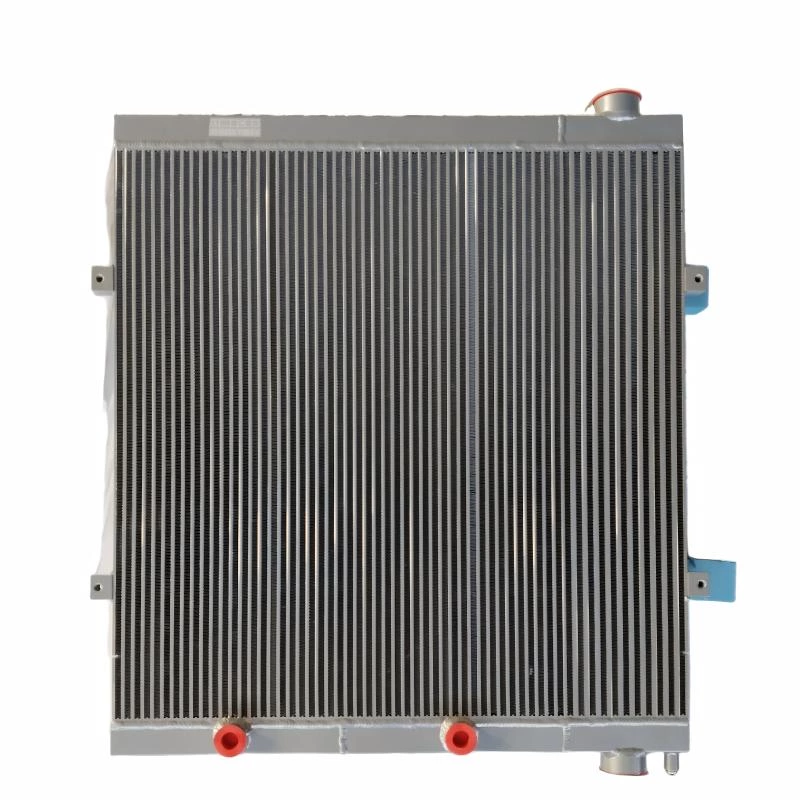
Radiators Without Fans: These systems are ideal for applications with consistent natural airflow, such as high-speed vehicles or equipment in well-ventilated environments. Fanless radiators offer lower maintenance and simpler installation, making them attractive for manufacturers seeking cost-effective cooling solutions. However, when airflow is limited or the load is heavy, performance may drop, highlighting the importance of careful system design.
Because there are fewer moving parts, fanless cooling systems generally require less maintenance and consume no additional electrical power.
However, cooling performance becomes increasingly dependent on operating conditions. When airflow decreases, heat transfer efficiency also decreases.
How a Radiator With a Fan Works
A radiator with a fan actively forces air through the cooling core regardless of vehicle speed or environmental conditions.
The fan creates a consistent airflow path across the radiator surface, helping maintain cooling performance during idling, low-speed operation, or heavy-duty workloads.
Fan-assisted cooling is particularly valuable in applications where natural airflow cannot be guaranteed.
Radiators With Fans: Fan-assisted radiators provide consistent airflow, ensuring stable temperatures even under heavy loads or stationary operation. This configuration is widely used in excavators, loaders, mining machinery, industrial air compressors, and heavy-duty trucks. Fans enable manufacturers to maintain thermal stability across diverse operating conditions and minimize downtime.
In these environments, a fan helps maintain stable operating temperatures even when equipment remains stationary for extended periods.
Radiator With Fan vs Radiator Without Fan
| Feature | Radiator Without Fan | Radiator With Fan |
|---|---|---|
| Airflow Source | Natural airflow | Forced airflow |
| Cooling Consistency | Depends on vehicle speed | Stable across all operating conditions |
| System Complexity | Simple, fewer components | Requires fan integration and power |
| Maintenance | Minimal | Medium, fan inspection required |
| Thermal Performance at Low Speed | Limited | Excellent |
| Heavy-Duty Applications | Less suitable | Highly suitable |
Neither solution is universally better. The correct choice depends on operating conditions and cooling requirements.
Which Applications Require Fan-Assisted Cooling?

Fan-assisted radiators are most commonly used when equipment generates significant heat while operating at low speeds.
Construction machinery provides a good example. Excavators, loaders, and mining equipment often spend long periods working in place with limited vehicle movement. Without sufficient airflow, temperatures can rise quickly.
Heavy-duty truck cooling systems may also rely on fans during traffic congestion, climbing operations, or high ambient temperature conditions.
Industrial air compressor cooling systems represent another common application. Because compressors frequently operate in fixed locations, fans help maintain consistent airflow through oil coolers and air coolers regardless of environmental conditions.
Advantages of Fanless Radiator Systems
Although fan-assisted cooling offers significant benefits, fanless systems remain attractive for certain applications.
The absence of a fan reduces system complexity, lowers maintenance requirements, and eliminates fan-related failure points. Fanless systems are also quieter and may improve overall energy efficiency.
When adequate airflow is available, a properly sized radiator can often provide sufficient cooling without additional airflow assistance.
This is one reason why radiator design, core structure, and heat transfer efficiency remain critical considerations.
Why Radiator Core Design Matters More Than the Fan
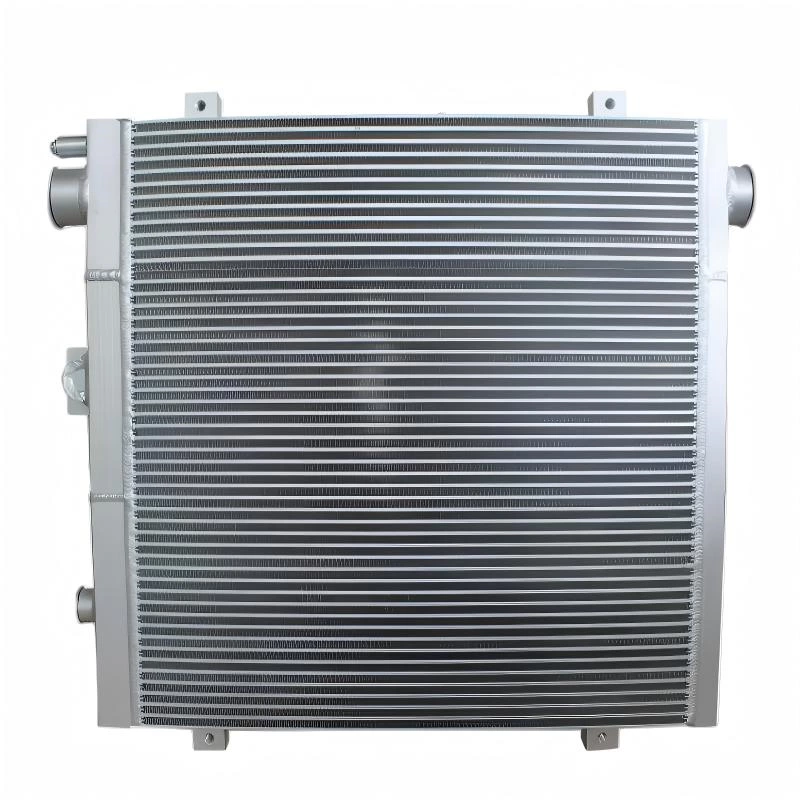
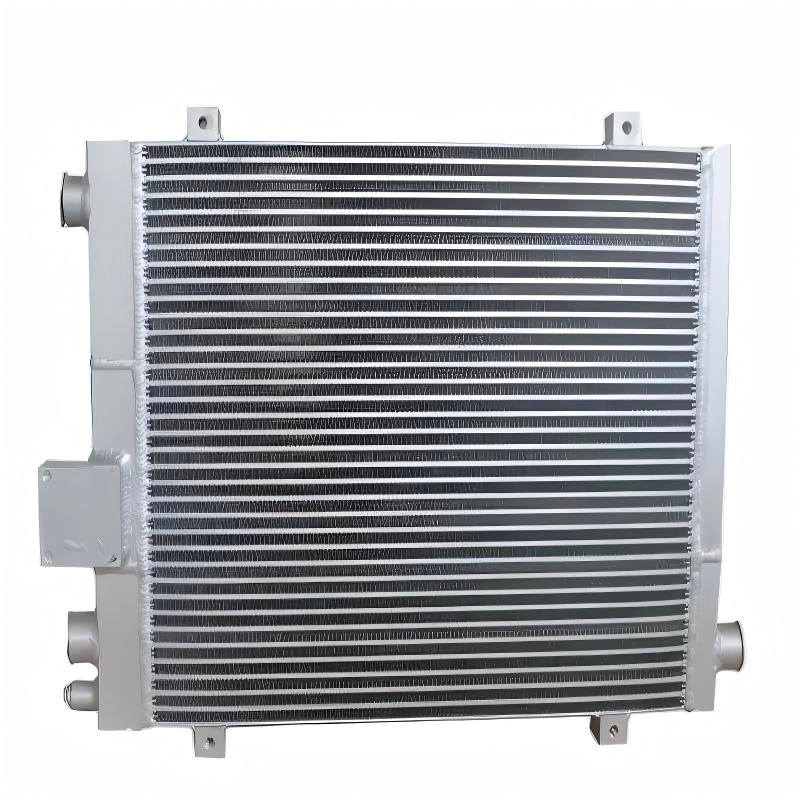
While fans enhance airflow, radiator performance ultimately depends on core design. Factors such as heat transfer area, fin density, plate-fin or tube-fin structure, airflow resistance, and material conductivity determine the system’s cooling capacity. Modern aluminum plate-fin cores offer high thermal efficiency in a compact design, providing consistent performance across automotive and industrial applications. Improving core efficiency often yields greater benefits than simply adding a larger fan.
The cooling capacity of a radiator depends largely on:
- Heat transfer area
- Fin density
- Tube or plate-fin structure
- Airflow resistance
- Material conductivity
Modern aluminum plate-fin radiator cores are widely used because they provide a large heat transfer surface within a compact footprint. This allows manufacturers to achieve high cooling performance while reducing weight and installation space.
In many applications, improving core efficiency delivers greater cooling benefits than simply increasing fan size.
Can Radiators Be Supplied With Fans?
Most industrial radiators and heat exchangers are supplied as cooling assemblies without fans by default. This allows equipment manufacturers to select airflow solutions based on their specific installation requirements.
However, fan integration can be provided as part of a custom cooling solution when operating conditions require additional airflow.
Factors that influence fan selection include:
- Thermal load
- Available installation space
- Operating temperature
- Equipment duty cycle
- Ambient conditions
As a result, many OEM and custom cooling projects combine high-efficiency radiator cores with appropriately sized electric or hydraulic fan systems.
Conclusion
Selecting the right cooling configuration depends on operating conditions, thermal loads, and airflow availability. Fanless radiators are ideal for high-speed applications with adequate natural airflow, while fan-assisted solutions provide stable temperatures in demanding or stationary operations. Engineers should evaluate the entire system—including radiator core design, airflow conditions, ambient environment, and thermal requirements—to ensure optimal efficiency, reliability, and long-term equipment life.Welcome to contact us!