Aluminum Radiator vs Copper Radiator: Which Is Better for Modern Cooling Systems?
The material used in a radiator affects far more than weight alone. It influences cooling efficiency, durability, manufacturing cost, service life, and overall system performance.
For decades, copper radiators were widely used in automotive and industrial cooling systems because of their excellent thermal conductivity. Today, however, most excavators, heavy-duty trucks, air compressors, and industrial equipment are equipped with aluminum radiators.

This shift did not happen simply because aluminum is lighter. Advances in manufacturing technology have enabled aluminum radiators to deliver high cooling efficiency, improved durability, and more flexible core designs while reducing overall system weight.
For equipment manufacturers, distributors, and maintenance professionals, understanding the differences between aluminum and copper radiators helps ensure the right cooling solution is selected for the application.
Why Radiator Material Matters
Every cooling system relies on efficient heat transfer. The radiator must remove heat from coolant, hydraulic oil, or compressed air while operating under varying temperatures, vibration levels, and environmental conditions.
Material selection influences several important factors:
- Heat dissipation capability
- Weight and equipment efficiency
- Corrosion resistance
- Manufacturing flexibility
- Pressure resistance
- Long-term maintenance costs
The best material is not necessarily the one with the highest thermal conductivity. Modern cooling systems must balance thermal performance with durability, cost, and packaging requirements.
Aluminum Radiator vs Copper Radiator: Quick Comparison
Although copper offers excellent thermal conductivity, radiator performance depends on much more than the material itself. Core structure, airflow, fin design, and coolant flow all contribute to overall cooling efficiency.
| Feature | Aluminum Radiator | Copper Radiator |
|---|---|---|
| Weight | Lightweight | Heavier |
| Heat Transfer Efficiency | Excellent | Excellent |
| Corrosion Resistance | High | Moderate |
| Pressure Resistance | High | Moderate |
| Manufacturing Cost | Lower | Higher |
| OEM Adoption | Widely Used | Less Common |
Why Most Modern Equipment Uses Aluminum Radiators
Walk through a modern construction site or mining operation and you'll find that most heavy equipment now relies on aluminum cooling systems.
Manufacturers have increasingly moved away from copper for several practical reasons.

Reduced Equipment Weight
Weight affects fuel consumption, transportation costs, and overall machine efficiency.
An aluminum radiator can be significantly lighter than an equivalent copper design. For large excavators, heavy-duty trucks, and industrial equipment, reducing unnecessary weight helps improve overall machine performance.
Better Packaging Flexibility
Modern equipment often contains multiple cooling circuits within a limited space.
Engine coolant radiators, hydraulic oil coolers, intercoolers, and transmission coolers frequently share a common cooling package.
Aluminum allows manufacturers to create compact, high-efficiency cooling assemblies that would be more difficult to achieve using traditional copper designs.
Improved Durability in Harsh Environments
Construction and mining equipment are constantly exposed to vibration, dust, moisture, and temperature fluctuations.
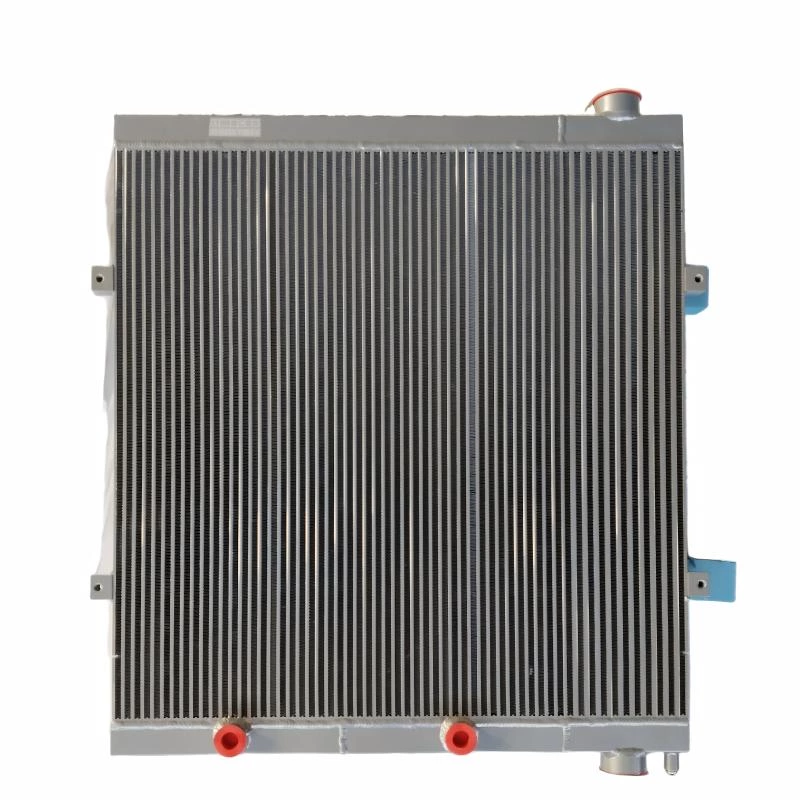
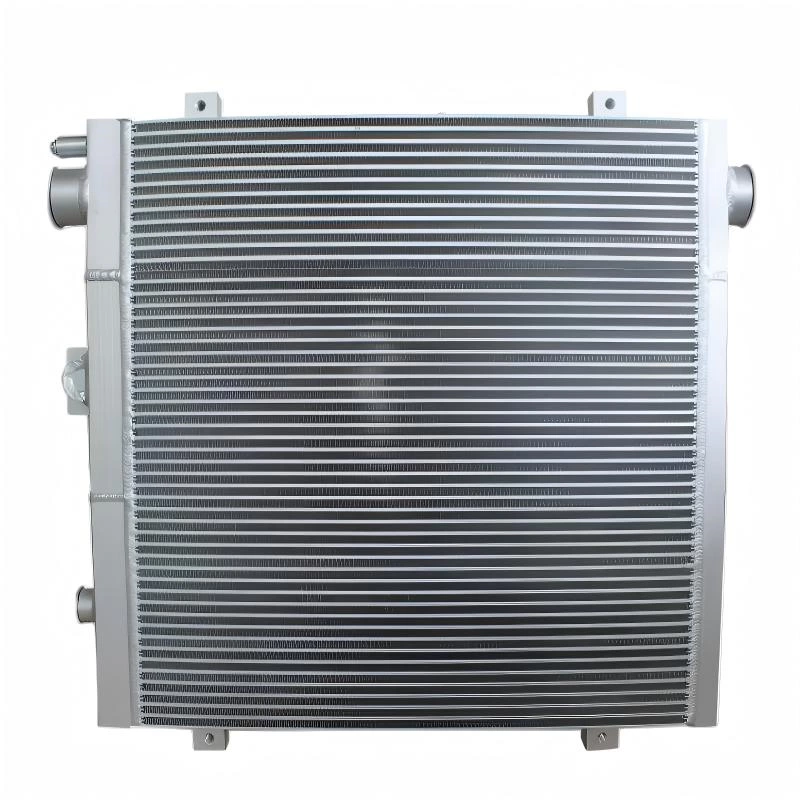
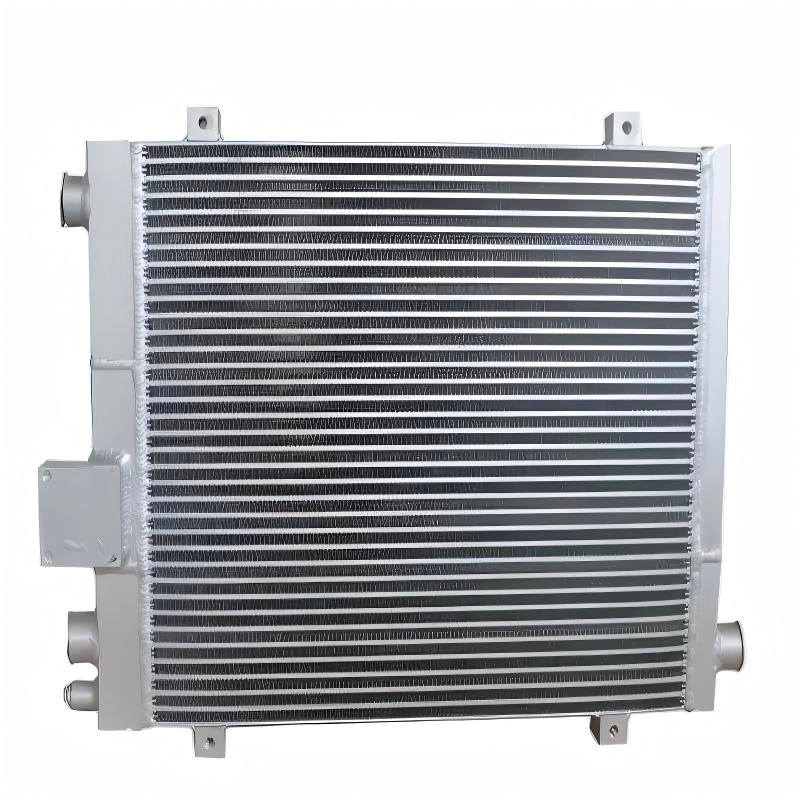
Brazed aluminum radiators provide excellent structural strength while maintaining long-term cooling performance in demanding environments.
Why Aluminum Radiators Perform Better in Heavy Equipment
Heavy equipment cooling systems operate very differently from passenger vehicles.
Excavators, loaders, mining trucks, and agricultural machinery often run for extended periods under high loads while generating substantial heat.
Under these conditions, cooling performance depends heavily on airflow management and core efficiency.
Why Aluminum Radiators Are Preferred in Heavy Equipment
| Operating Condition | Why Aluminum Performs Better |
|---|---|
| Continuous Operation | Maintains stable cooling efficiency over long working hours |
| High Vibration | Brazed aluminum cores provide strong structural integrity |
| Dusty Environments | Corrosion-resistant construction supports longer service life |
| Limited Installation Space | Compact core design maximizes cooling capacity |
| Heavy Thermal Loads | Efficient heat transfer helps prevent overheating |
Modern aluminum radiators offer several advantages:
These characteristics explain why aluminum excavator radiators have become the standard solution across major equipment brands including CAT, KOMATSU, HITACHI, VOLVO, HYUNDAI, DOOSAN, KOBELCO, and JCB.
Plate-Fin Aluminum Radiators vs Traditional Copper Designs
Comparing aluminum and copper alone does not provide the full picture.
Core design often has a greater impact on cooling performance than material selection.

Modern plate-fin aluminum radiators use a dense fin structure to maximize heat transfer area within a compact core volume.
Benefits include:
- Larger effective heat exchange surface
- Improved airflow utilization
- High pressure resistance
- Compact installation dimensions
- Lower overall system weight
Because of these advantages, plate-fin aluminum cores are now widely used in:
- Excavator radiators
- Hydraulic oil coolers
- Air compressor coolers
- Heavy-duty truck radiators
- Industrial heat exchangers
In many applications, upgrading core design delivers greater cooling improvements than changing materials alone.
Plate-Fin Aluminum Core vs Traditional Copper Core
| Feature | Plate-Fin Aluminum Core | Traditional Copper Core |
|---|---|---|
| Heat Transfer Area | Large | Moderate |
| Weight | Lightweight | Heavy |
| Pressure Resistance | High | Moderate |
| Design Flexibility | Excellent | Limited |
| Cooling Efficiency | High | Moderate |
Are Copper Radiators Still Used Today?
Despite the industry's transition toward aluminum, copper radiators have not disappeared entirely.
Certain applications still benefit from copper construction.
Examples include:
- Classic vehicle restoration
- Vintage truck maintenance
- Specialty repair markets
- Low-volume custom projects
Copper can also be easier to repair through traditional soldering methods, which remains attractive for some maintenance operations.
However, these applications represent a relatively small portion of today's cooling system market.
How to Choose the Right Radiator Material
Selecting the right radiator depends on the specific operating environment rather than material preference alone.
For most modern applications, aluminum provides the best balance of cooling performance, durability, manufacturing efficiency, and operating cost. This is particularly true for construction machinery radiators, heavy-duty truck cooling systems, and industrial air compressor coolers, where long operating hours and demanding environments require reliable thermal management.
Which Radiator Material Is Right for Your Application?
| Application | Recommended Material |
|---|---|
| Excavators | Aluminum Radiator |
| Construction Machinery | Aluminum Radiator |
| Heavy-Duty Trucks | Aluminum Radiator |
| Air Compressor Cooling Systems | Aluminum Radiator |
| Industrial Heat Exchangers | Aluminum Radiator |
| Classic Vehicle Restoration | Copper Radiator |
Why Aluminum Radiators Have Become the Industry Standard
The cooling requirements of modern equipment continue to increase as engines become more powerful and equipment becomes more compact.
Manufacturers need cooling systems that can deliver:
- High heat transfer efficiency
- Lightweight construction
- Long service life
- Compact dimensions
- Reliable operation under heavy loads
Aluminum radiators meet these requirements while supporting advanced plate-fin core technology and integrated cooling system designs.
As a result, aluminum has become the preferred material for construction machinery radiators, heavy-duty truck radiators, air compressor coolers, and industrial heat exchangers worldwide.
Conclusion
The debate between aluminum radiators and copper radiators is no longer simply about thermal conductivity.
Modern cooling system performance depends on a combination of material selection, core design, airflow management, and operating conditions.
Aluminum radiators have become the preferred solution for most modern equipment.While copper still serves niche applications, Whether used in excavators, heavy-duty trucks, air compressor systems, or applications requiring a high-efficiency radiator core, aluminum radiators continue to provide an excellent balance of cooling performance, durability, and cost efficiency. due to their lightweight construction, durability, manufacturing flexibility, and compatibility with high-efficiency plate-fin core technology.
For excavators, heavy-duty trucks, air compressors, and industrial cooling systems, aluminum radiators continue to set the standard for reliable and efficient thermal management.