Aluminum Heat Exchanger Solutions for Industrial and Heavy-Duty Cooling Systems
Aluminum heat exchangers are widely used in modern industrial thermal management systems where reliable cooling performance is critical for equipment efficiency and operational stability. Compared with traditional copper or steel-based cooling solutions, aluminum structures provide higher heat transfer efficiency, reduced weight, and improved resistance to vibration and long-term mechanical stress.
As industrial systems continue to evolve toward higher power density and more compact configurations, demand for advanced industrial heat exchanger systems continues to increase across construction machinery, heavy-duty transportation, air compression systems, and hydraulic equipment cooling applications.
Why Aluminum Heat Exchangers Are Replacing Traditional Cooling Systems

Modern thermal systems must deliver higher cooling efficiency within increasingly limited installation space. In this context, the aluminum heat exchanger has become a preferred solution for many industrial applications.
Compared with conventional copper radiator structures, aluminum designs offer better adaptability for high-performance systems such as oil cooler systems, engine cooling units, and integrated thermal management modules.
- High thermal conductivity for efficient and stable heat dissipation
- Lightweight structure suitable for mobile and heavy-duty equipment
- Strong resistance to vibration, pressure, and continuous operation conditions
- Optimized for compact installation in industrial environments
Industrial Applications of Aluminum Heat Exchanger Systems
The use of industrial heat exchangers continues to expand across multiple heavy-duty industries where thermal stability directly impacts system performance and equipment lifespan.
| Industry | Cooling Application |
|---|---|
| Construction Machinery | Excavator radiator systems, hydraulic oil cooler units, engine cooling systems |
| Heavy-Duty Trucks | Engine cooling systems, intercoolers, transmission and radiator assemblies |
| Air Compressor Systems | Aftercoolers, oil cooling systems, and compressed air heat exchangers |
| Industrial Equipment | Hydraulic power units, continuous-duty machinery, and thermal management systems |
Plate-Fin Aluminum Heat Exchanger Technology

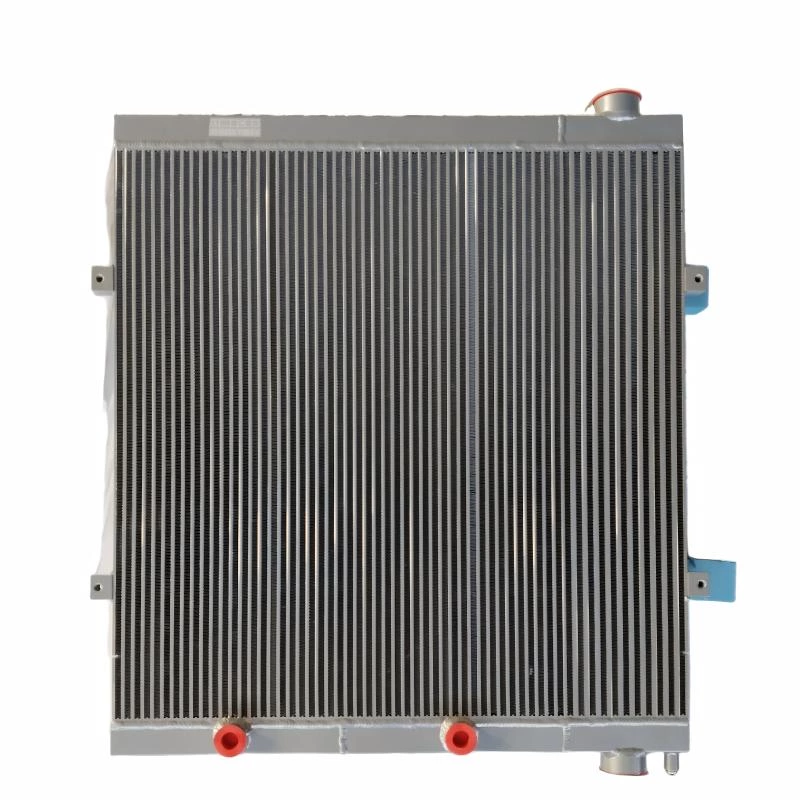
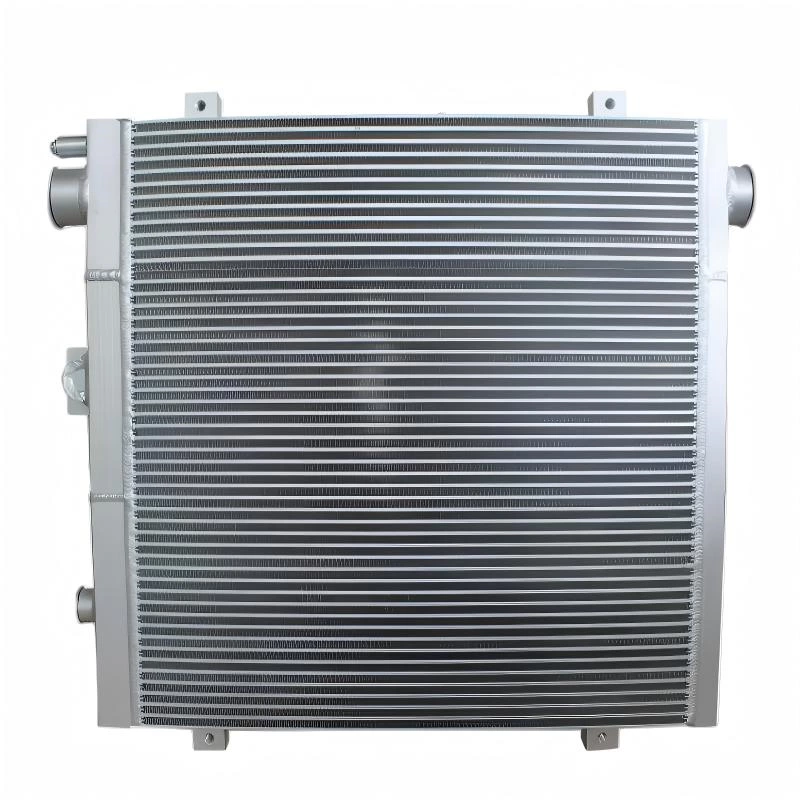
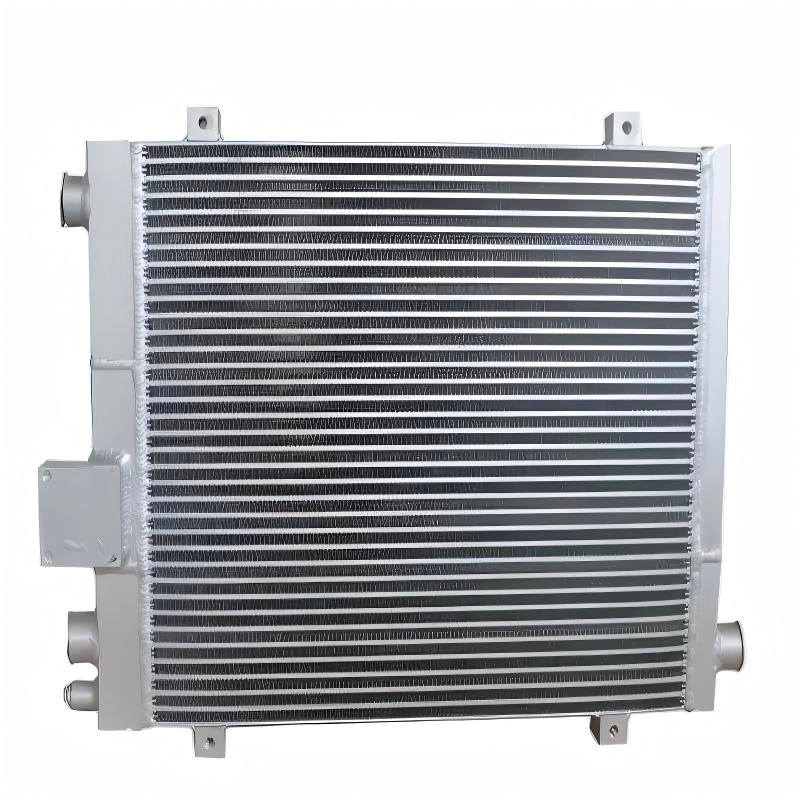
The plate-fin structure is widely used in modern aluminum cooling systems, especially where heat transfer efficiency and space utilization are critical.
In industrial applications, this type of design is typically found in:
- Aluminum radiator systems for construction machinery
- Oil cooler systems in heavy-duty hydraulic equipment
- Integrated thermal modules for compact industrial units
Its main advantage lies in the extended heat exchange surface created by dense fin arrangements, allowing stable thermal performance even under continuous load conditions.
OEM-Configured Cooling Solutions
Industrial cooling systems are rarely standardized. Installation space, airflow direction, and heat load often vary between different machines and working environments.
For this reason, aluminum heat exchangers are commonly engineered as configurable OEM solutions rather than fixed models.
- Core size adjustment based on installation space
- Fin density optimization for different heat loads
- Airflow structure design for system integration
- Reinforced frames for vibration-heavy environments
This approach allows a single cooling concept to adapt across construction machinery, transport equipment, and industrial power systems.
Performance in Industrial Operating Conditions

Cooling systems used in industrial environments must operate under non-stop load cycles, vibration stress, and external contamination such as dust and moisture.
- Mining equipment working under continuous high load
- Construction machinery operating in variable temperature environments
- Industrial systems requiring long-duration thermal stability
Aluminum heat exchangers are selected in these applications due to their structural stability and consistent heat dissipation performance over extended operating periods.
Conclusion
Aluminum heat exchangers have become a core technology in modern industrial cooling systems. Their combination of efficiency, durability, and design flexibility makes them suitable for applications ranging from construction machinery to industrial power and thermal management systems.
As industrial equipment continues to evolve toward higher efficiency and compact design, demand for advanced industrial heat exchanger solutions will continue to grow across global markets.