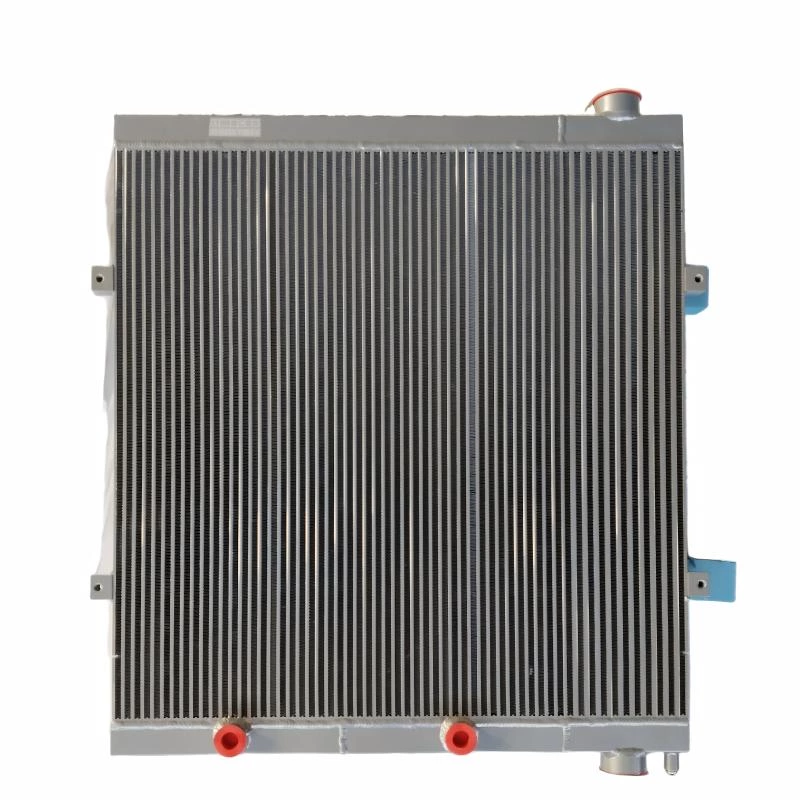
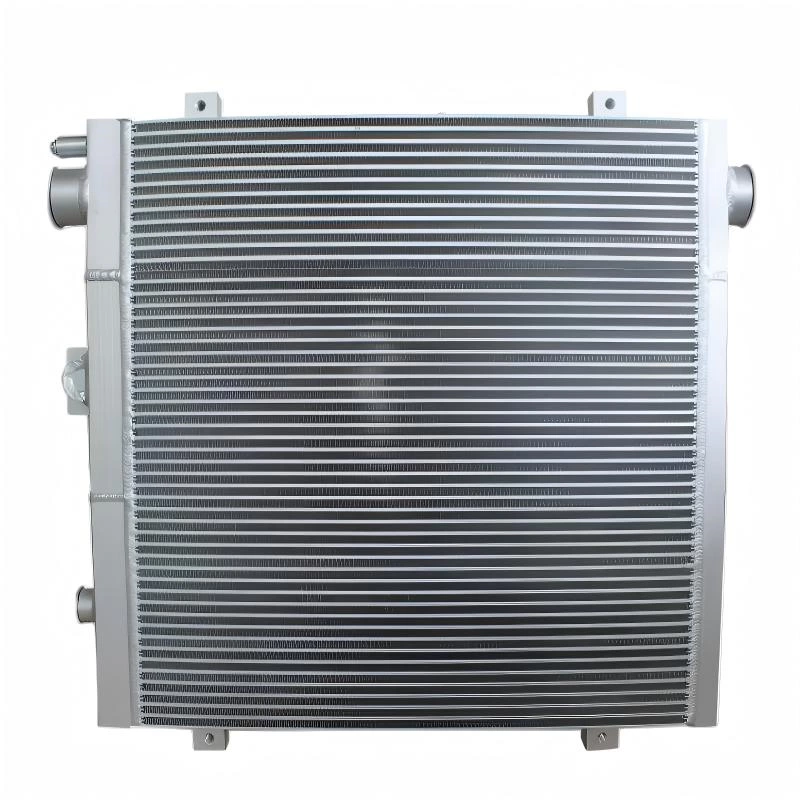
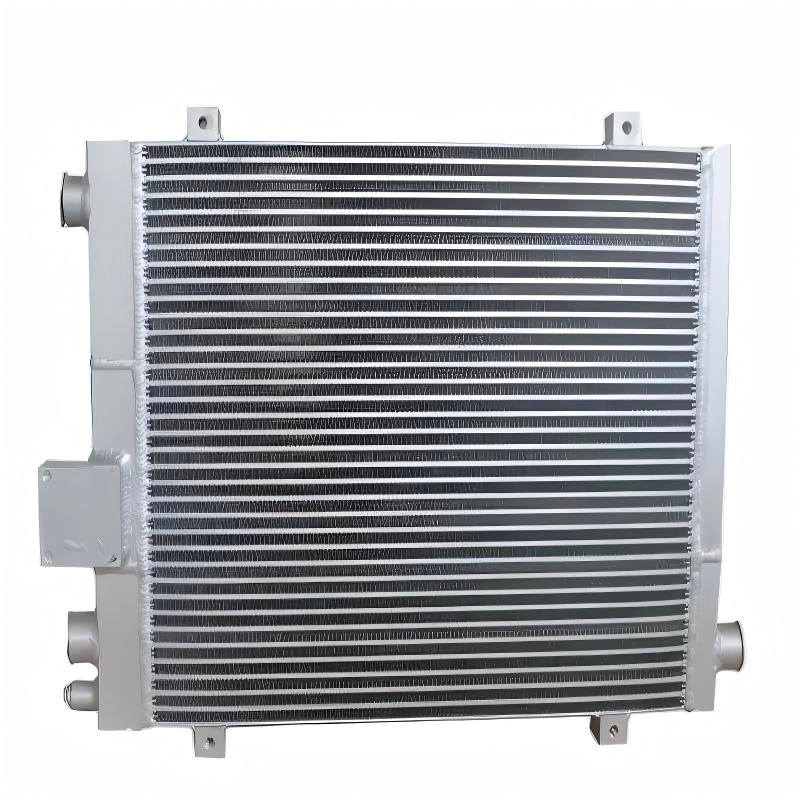
Aluminum Radiator Heat Exchanger for Industrial Cooling Applications
Industrial equipment often operates under continuous thermal loads, limited installation space, and demanding environmental conditions. In these applications, the cooling system must remove heat efficiently while maintaining stable performance over long operating periods.
An aluminum radiator heat exchanger is commonly used to transfer heat from coolant, hydraulic oil, or other working fluids to the surrounding air. Its compact structure, low weight, and efficient heat transfer characteristics make it suitable for a wide range of industrial cooling applications, including construction machinery, commercial vehicles, generators, agricultural equipment, and other heavy-duty systems.
Radiator heat exchanger performance depends on more than the core material alone. Core dimensions, tube configuration, fin structure, airflow, cooling medium, pressure conditions, and installation layout all influence how effectively the unit can control operating temperature.
This article explains how aluminum radiator heat exchangers work, which design factors affect cooling performance, where they are commonly used, and what information should be considered when selecting or developing a radiator heat exchanger for an industrial application.
What Is an Aluminum Radiator Heat Exchanger?
An aluminum radiator heat exchanger is an air-cooled heat transfer component designed to move heat from a liquid cooling medium into the surrounding air. The fluid flows through internal tubes or passages, while fins increase the external surface area available for heat dissipation.

As air passes through the radiator core, heat is transferred from the fluid to the tube walls, then through the fins, and finally into the airflow. The cooled fluid then returns to the equipment or cooling circuit to continue absorbing heat.
Depending on the application, an aluminum radiator heat exchanger may be used for engine coolant, hydraulic oil, industrial process fluids, or other thermal management circuits. The exact core structure and connection layout can vary according to the required cooling capacity, available airflow, installation space, and operating conditions.
| Design Element | Main Function |
|---|---|
| Aluminum Core | Provides the main heat transfer structure with a lightweight construction |
| Tubes / Flow Passages | Carry coolant or oil through the heat exchanger |
| Fins | Increase surface area and improve heat transfer to the airflow |
| Headers | Distribute the fluid into and out of the core |
| Connections | Connect the radiator heat exchanger to the cooling circuit |
For industrial applications, the radiator heat exchanger should be designed around the complete cooling system rather than selected only by external size. Matching thermal load, airflow, fluid characteristics, pressure, and installation requirements is essential for achieving stable cooling performance.
How an Aluminum Radiator Heat Exchanger Works
An aluminum radiator heat exchanger removes heat by transferring thermal energy from the working fluid to the surrounding air. The process depends on three connected steps: fluid flow through the core, heat conduction through the aluminum structure, and heat removal by airflow across the fins.

Hot coolant or oil enters the heat exchanger through the inlet and is distributed across internal tubes or flow passages. As the fluid moves through the core, heat passes through the tube walls into the attached fins. Air moving across the fin surface then carries the heat away before the cooled fluid leaves the outlet and returns to the equipment.
The effectiveness of this process depends on the balance between fluid flow and airflow. If coolant circulation is restricted, heat cannot be transferred efficiently into the core. If airflow is insufficient, heat may remain concentrated in the fins even when the internal fluid path is adequate.
| Cooling Stage | What Happens |
|---|---|
| Hot Fluid Enters | Coolant or oil carries heat from the engine, hydraulic system, or industrial equipment into the radiator heat exchanger. |
| Heat Transfers Through Tubes | Thermal energy moves from the fluid through the aluminum tube or passage walls. |
| Fins Spread the Heat | Fins increase the available surface area so heat can be transferred more effectively to the surrounding air. |
| Air Removes Heat | Natural or forced airflow carries heat away from the fin surface. |
| Cooled Fluid Returns | The lower-temperature fluid leaves the radiator and returns to the cooling circuit. |
In many industrial systems, airflow is provided by an engine-driven or electric fan. Fan performance, shroud design, air path, and contamination around the core can all affect the amount of air actually passing through the heat exchanger.
For this reason, radiator performance should not be evaluated only by core size. A larger or thicker core does not automatically provide better cooling if airflow, fluid distribution, or installation layout is not suitable for the design.
Main Components of a Radiator Heat Exchanger
The cooling performance and mechanical compatibility of a radiator heat exchanger are determined by several components working together. Their dimensions and structure may need to change from one industrial application to another.
Radiator Core
The radiator core is the main heat exchange section. It contains the internal fluid passages and external fins that allow heat to move from the coolant or oil into the airflow.
Core height, width, thickness, and internal arrangement influence both cooling capacity and installation compatibility. For replacement or custom projects, these dimensions normally need to be confirmed carefully against the available space and operating requirements.
Tubes and Fins
Tubes or internal passages carry the working fluid through the heat exchanger, while fins increase the air-side heat transfer area. Tube spacing, fin density, and fin geometry affect thermal performance, airflow resistance, and how easily dust or debris can pass through the core.
Industrial equipment working in clean indoor conditions may use a different fin arrangement from construction or agricultural machinery operating in dusty environments.
Headers and Connections
Headers distribute the working fluid across the core and collect it again before the fluid exits the heat exchanger. Inlet and outlet connections link the radiator to the rest of the cooling circuit.
Header size, connection location, orientation, and mounting structure need to match the equipment layout. These details are especially important when developing a custom radiator heat exchanger from drawings, dimensions, or an existing sample.
Why Aluminum Is Used for Industrial Radiator Heat Exchangers
Aluminum is widely used in industrial radiator heat exchangers because it combines good thermal performance with low weight, corrosion resistance, and flexible manufacturing options. These characteristics make it suitable for equipment where cooling capacity must be balanced with compact size, structural reliability, and installation requirements.
Compared with heavier traditional materials, aluminum allows the heat exchanger to provide a large cooling surface without adding unnecessary weight to the machine. This is especially useful for mobile equipment such as excavators, trucks, agricultural machinery, and other applications where component weight and installation space need to be controlled.
| Aluminum Advantage | Why It Matters in Industrial Cooling |
|---|---|
| Good Thermal Conductivity | Supports efficient heat transfer from the working fluid to the air side of the radiator. |
| Lightweight Construction | Reduces overall component weight and makes the heat exchanger easier to integrate into mobile or compact equipment. |
| Corrosion Resistance | Provides suitable durability for many coolant, oil, and industrial operating environments when the correct material and process are selected. |
| Flexible Core Design | Allows core size, thickness, tube arrangement, fin structure, and flow layout to be adapted to different cooling requirements. |
| Suitable for Brazed Assemblies | Supports compact radiator and heat exchanger structures with strong joints and consistent production quality. |
Material selection alone does not determine cooling performance. The aluminum alloy, core structure, fin design, tube configuration, brazing quality, and operating environment all need to work together. A well-designed aluminum radiator heat exchanger should therefore be developed around the complete thermal and mechanical requirements of the equipment.
Industrial Cooling Applications
Aluminum radiator heat exchangers are used across a broad range of industrial equipment, but the design requirements can differ significantly between applications. Heat load, vibration, dust exposure, airflow, pressure, and available installation space all influence the final configuration.

Construction Machinery
Excavators, loaders, mining machines, and other construction equipment often operate under continuous load in dusty and high-vibration environments. Radiator heat exchangers for these machines need to provide stable cooling while maintaining sufficient airflow through the core.
Depending on the system, the radiator may be used for engine coolant, hydraulic oil, or as part of a combined cooling package. Core dimensions, fin spacing, and structural strength need to match the actual machine layout and working conditions.
Heavy-Duty Trucks and Commercial Vehicles
Commercial vehicles require reliable cooling during long operating cycles and changing load conditions. Aluminum radiator heat exchangers help control engine and system temperatures while keeping component weight relatively low.
For replacement or OEM projects, the radiator core must match the vehicle model, installation space, connection layout, and required heat rejection capacity.
Generators and Industrial Equipment
Stationary generators, industrial machinery, and power equipment may run for extended periods at stable but high thermal loads. In these applications, radiator heat exchanger design needs to consider continuous airflow, fan performance, coolant flow, and the surrounding installation environment.
Custom core dimensions and connection layouts can be useful when the cooling system must fit inside a compact enclosure or integrate with an existing machine structure.
Agricultural and Special-Purpose Machinery
Agricultural machinery often works around dust, crop debris, and changing outdoor conditions. These environments can place additional demands on fin spacing and airflow through the radiator core.
Special-purpose machines may also use non-standard radiator dimensions or connection layouts. When standard products do not match, custom development from drawings, dimensions, OE information, or samples can provide a more suitable solution.
For construction machinery applications, more specific radiator and cooling solutions are available through our construction machinery radiator range.
What Affects Radiator Heat Exchanger Performance?
The performance of an aluminum radiator heat exchanger depends on the balance between heat load, fluid flow, airflow, core structure, and installation conditions. Increasing one design parameter does not always improve cooling because changes to core thickness, fin density, or tube arrangement can also increase airflow resistance or pressure drop.
For industrial cooling applications, the radiator should therefore be evaluated as part of the complete cooling system rather than as an isolated component.
| Performance Factor | Influence on Cooling |
|---|---|
| Heat Load | Determines how much thermal energy the radiator needs to remove from the system. |
| Core Size | Affects the available heat transfer area and must fit within the installation space. |
| Core Thickness | Can increase heat transfer area but may also increase airflow resistance. |
| Tube Configuration | Influences fluid distribution, flow resistance, and heat transfer through the core. |
| Fin Structure | Affects air-side heat transfer, airflow resistance, and resistance to dust or debris blockage. |
| Airflow | Determines how effectively heat can be removed from the fin surface. |
| Cooling Medium | Coolant, hydraulic oil, and other fluids have different thermal and flow characteristics. |
| Operating Environment | Dust, vibration, ambient temperature, and continuous load can affect the required radiator design. |
For example, increasing fin density can provide more heat transfer surface, but a very dense fin structure may be less suitable for construction or agricultural machinery exposed to dust and debris. Similarly, increasing core thickness may provide additional surface area while making it more difficult for the available fan to move sufficient air through the entire core.
The most effective radiator heat exchanger design is therefore one that balances thermal performance with airflow, fluid circulation, available space, and the actual working environment.
How to Select an Aluminum Radiator Heat Exchanger
Selecting an aluminum radiator heat exchanger begins with understanding the application rather than choosing a core based only on external dimensions. The cooling medium, heat load, airflow source, installation space, operating pressure, and surrounding environment should all be considered before the final core specification is confirmed.
Confirm the Cooling Medium and Application
The first step is to identify what needs to be cooled. Engine coolant, hydraulic oil, and other industrial fluids have different operating conditions, so the internal flow passages and overall radiator configuration should be appropriate for the actual cooling circuit.
Determine the Available Installation Space
Core height, width, and thickness are often limited by the equipment structure. Fan position, shrouds, mounting frames, hoses, piping, and nearby components can further restrict the available space.
For replacement projects, original dimensions, OE information, drawings, or an existing sample can provide useful references. For new equipment, the radiator can be developed around the available packaging space.
Evaluate Airflow Conditions
A radiator requires sufficient airflow to remove heat from the fins. Fan size, fan speed, shroud design, airflow direction, and restrictions around the heat exchanger should therefore be considered together with the core design.
Equipment operating in dusty environments may also require a fin arrangement that maintains airflow as contamination accumulates during operation.
Consider Pressure and Operating Conditions
The radiator structure and connections should be suitable for the pressure, temperature, vibration, and duty cycle of the application. Heavy-duty industrial equipment may operate continuously or under repeated load changes, placing different demands on the heat exchanger compared with light-duty applications.
Match the Core Structure to the Cooling Requirement
Once the application conditions are understood, core thickness, tube arrangement, fin structure, flow layout, headers, and connections can be selected or developed accordingly. A larger core is not necessarily the best solution if it creates excessive airflow resistance or cannot be integrated effectively into the machine.
For industrial projects where standard specifications do not match the equipment, an aluminum radiator core can be developed according to the required dimensions, thermal conditions, and installation structure.