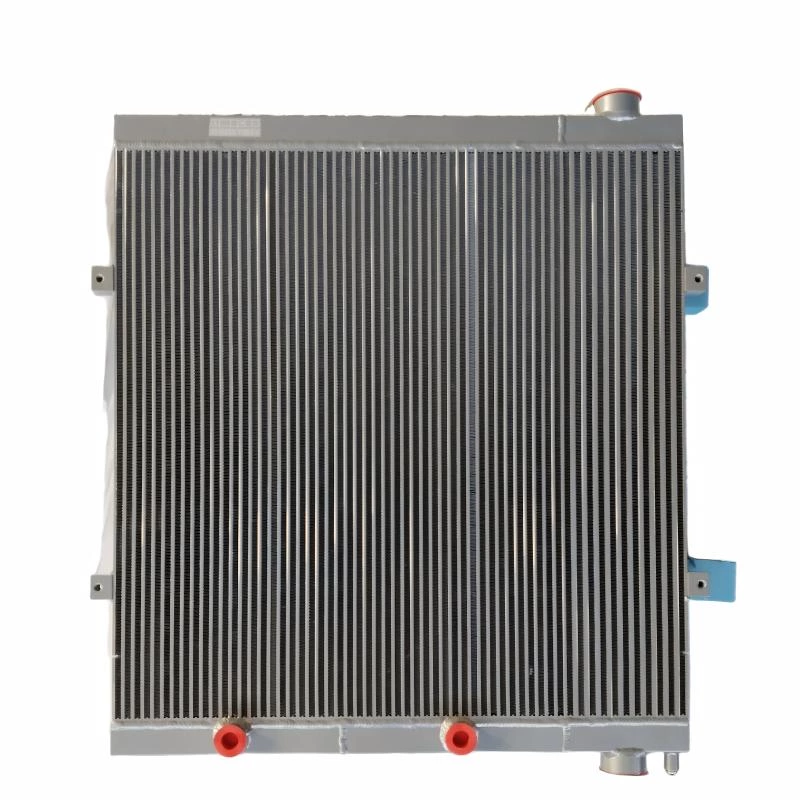
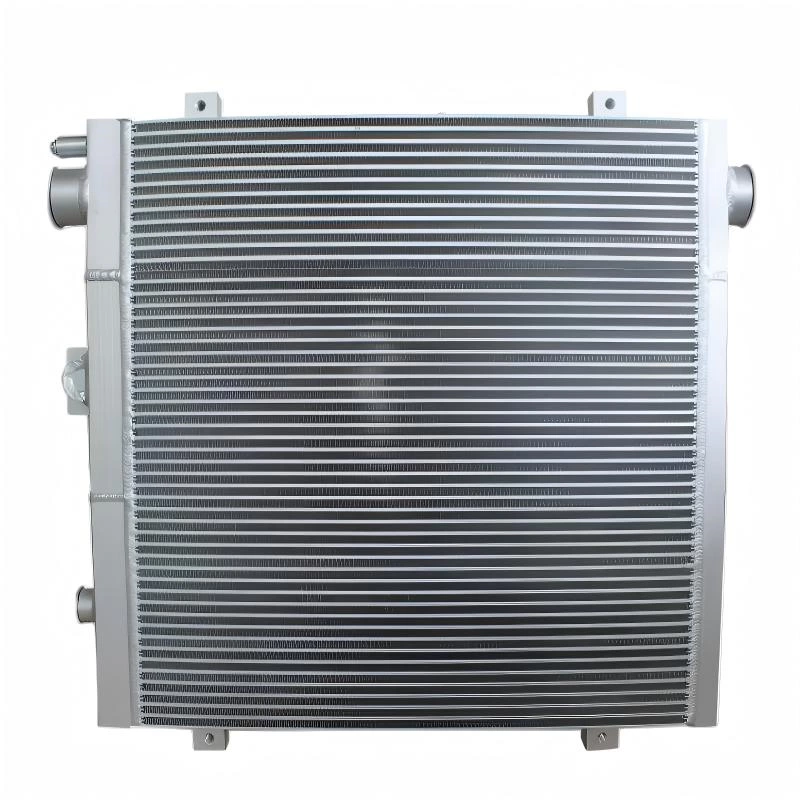
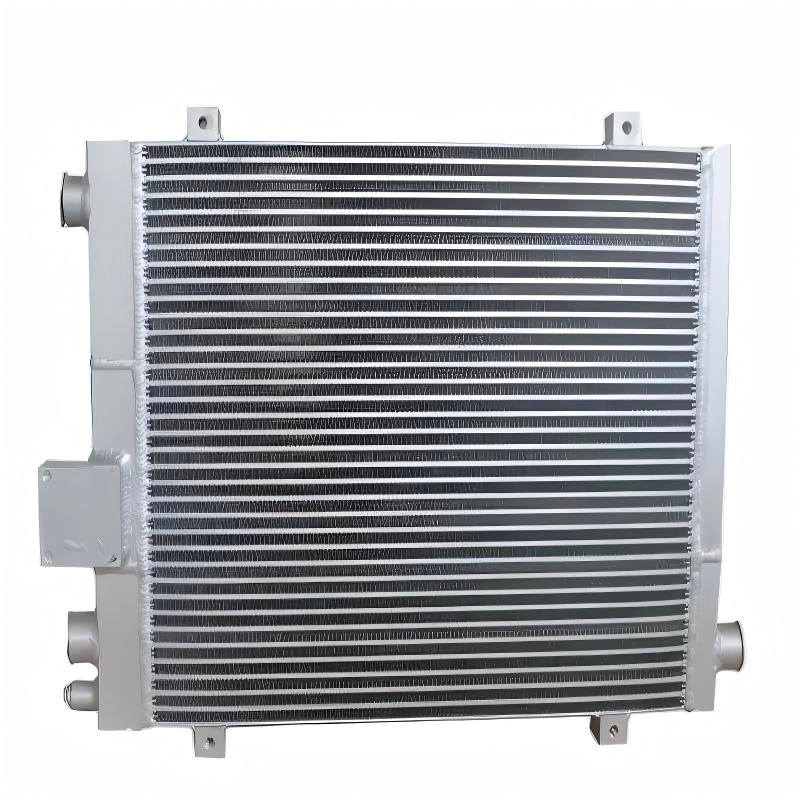
What Data Is Needed for Custom Radiator Sizing?
Custom industrial radiator sizing depends on more than the external dimensions of the radiator. To determine a suitable design, the cooling requirement, fluid conditions, airflow, pressure, installation space, and operating environment all need to be considered together.

Two radiators with similar dimensions can perform very differently when they operate with different heat loads, flow rates, inlet temperatures, fan conditions, or ambient temperatures. For this reason, accurate application data is important before a custom radiator specification is confirmed.
If complete thermal data is not available, a project can still begin with a technical drawing, OE number, existing sample, equipment model, or confirmed installation dimensions. Additional operating information can then be reviewed to help determine the required radiator size and configuration.
Why Accurate Radiator Sizing Data Matters
Radiator sizing is a system-matching process rather than simply selecting the largest radiator that can fit into the available space. Increasing radiator size may provide more heat transfer area, but performance still depends on whether the fluid flow, airflow, pressure conditions, and installation layout are suitable for the application.
| Data Group | Why It Matters |
|---|---|
| Heat Load | Defines how much heat the radiator needs to remove. |
| Fluid Conditions | Affect flow behavior, heat transfer, and pressure requirements. |
| Airflow | Determines how effectively heat can be removed from the radiator. |
| Operating Pressure | Influences structural and connection requirements. |
| Installation Space | Limits the available radiator dimensions and connection layout. |
| Working Environment | Affects airflow conditions, contamination exposure, vibration, and durability requirements. |
Incomplete or inaccurate information can lead to insufficient cooling capacity, excessive pressure drop, poor airflow matching, installation interference, or incorrect inlet and outlet positions. The goal of custom radiator sizing is therefore not to maximize one parameter, but to match the radiator to the actual thermal and mechanical requirements of the equipment.
1. Cooling Medium
The first step in custom radiator sizing is to identify the working fluid that needs to be cooled. Different fluids have different thermal and flow characteristics, so the cooling medium can influence the required radiator size, flow arrangement, pressure conditions, and connection design.
Common cooling media include engine coolant, water-glycol mixtures, hydraulic oil, lubricating oil, and other industrial fluids. Information about the actual fluid is important because viscosity, operating temperature, and thermal properties can affect both heat transfer performance and system resistance.
For custom radiator sizing, the cooling medium should be confirmed before the final specification is selected.
If the system uses a special fluid or a specific coolant mixture, providing the fluid type and concentration can help improve the accuracy of the sizing evaluation.
2. Required Heat Rejection
The required heat rejection is one of the most important inputs in radiator sizing. It defines how much heat the radiator must remove from the working fluid under normal operating conditions.
Heat rejection is commonly expressed in kilowatts. If this value is already available from equipment calculations or test data, it can be used directly during radiator selection or custom design.
When a confirmed heat load is not available, other operating data can help support the evaluation, such as equipment power, fluid flow rate, inlet temperature, target outlet temperature, and actual operating conditions.
Radiator size should be based on the required heat rejection, not on external dimensions alone.
A radiator that fits the available space may still be unsuitable if the required cooling capacity is higher than the heat it can reject under the available airflow and temperature conditions.
3. Fluid Flow Rate
Fluid flow rate determines how much coolant, oil, or other working fluid passes through the radiator over a given period. It is usually provided in units such as L/min or m³/h.
Flow rate affects fluid velocity, heat transfer, and pressure drop through the radiator. A design that works well at one flow rate may not provide the same performance when the system flow is significantly higher or lower.
| Flow Condition | Possible Design Impact |
|---|---|
| Low Flow Rate | May reduce the amount of heat carried to the radiator and change the required heat transfer conditions. |
| High Flow Rate | Can increase fluid velocity and pressure drop through the radiator. |
| Variable Flow | May require the radiator to perform across a wider operating range. |
For accurate sizing, the normal operating flow rate is the most useful value. If the system has minimum and maximum flow conditions, providing both can help evaluate whether the radiator needs to perform across different operating states.
Flow rate should always be reviewed together with heat load, fluid temperature, operating pressure, and allowable pressure drop rather than treated as an independent parameter.
4. Inlet, Outlet and Ambient Temperatures
Temperature data is essential for determining how difficult the cooling task will be. The most useful values are the fluid inlet temperature, the required outlet temperature, and the ambient air temperature around the equipment.

The inlet temperature shows how hot the working fluid is when it enters the radiator, while the target outlet temperature defines the required cooling result. Ambient air temperature is equally important because the radiator transfers heat to the surrounding air.
| Temperature Data | Why It Matters |
|---|---|
| Fluid Inlet Temperature | Defines the starting temperature of the fluid entering the radiator. |
| Target Outlet Temperature | Indicates how much cooling is required before the fluid returns to the system. |
| Ambient Air Temperature | Affects the temperature difference available for heat transfer to the surrounding air. |
Cooling becomes more difficult when ambient temperature increases or when the required outlet temperature is close to the surrounding air temperature. For equipment operating outdoors or in high-temperature environments, the maximum expected ambient temperature should be provided rather than only the average condition.
Radiator sizing should be based on the actual operating temperature range, especially the highest expected ambient condition.
5. Airflow and Fan Information
Airflow determines how effectively heat can be removed from the radiator surface. Even when the thermal load and fluid conditions are known, radiator sizing can still be inaccurate if the available airflow is not considered.

Useful fan and airflow information may include air volume, fan diameter, fan speed, airflow direction, available static pressure, fan-to-radiator distance, and shroud arrangement.
- Air volume or airflow rate
- Fan diameter
- Fan speed
- Airflow direction
- Static pressure, if available
- Fan-to-radiator distance
- Shroud dimensions or drawings
- Inlet and outlet airflow restrictions
If complete airflow data is not available, the fan model, equipment drawing, photos, or an existing radiator installation can still provide useful reference information during the sizing process.
The surrounding equipment layout should also be considered. Screens, filters, body panels, hoses, guards, and nearby components can restrict airflow before or after it passes through the radiator.
For this reason, radiator performance should not be evaluated independently from the fan and air path. A radiator that performs well under unrestricted test conditions may provide different results when installed inside a compact machine enclosure.
6. Operating Pressure and Allowable Pressure Drop
Operating pressure and pressure drop describe two different parts of radiator performance, and both should be provided when possible.
| Parameter | Design Influence |
|---|---|
| Operating Pressure | Defines the pressure the radiator must safely withstand during normal system operation. |
| Allowable Pressure Drop | Defines how much pressure loss can be accepted as the fluid passes through the radiator. |
Operating pressure influences the structural requirements of the radiator, including connections, headers, joints, and the overall assembly. If pressure conditions are higher than expected, the radiator must be designed accordingly.
Allowable pressure drop affects the internal flow arrangement. A more restrictive flow path may improve heat transfer in some situations, but excessive resistance can increase system pressure loss and place additional demand on pumps or other components.
Operating pressure tells us what the radiator must withstand; allowable pressure drop tells us how much flow resistance the system can accept.
For hydraulic, lubrication, and other industrial systems, pressure information is especially important because fluid-side resistance can directly affect overall system efficiency.
7. Available Installation Space
Available installation space places a practical limit on radiator size and overall configuration. Even when a larger radiator could provide more heat transfer area, the final design still needs to fit within the equipment without interfering with nearby components.
Useful dimensional information includes the maximum available height, width, thickness, and total installation envelope. It is also important to identify the positions of surrounding components such as fans, shrouds, hoses, guards, frames, and body panels.
| Installation Data | Why It Matters |
|---|---|
| Maximum Height | Defines the vertical space available for the radiator assembly. |
| Maximum Width | Limits the available frontal area and overall fit. |
| Maximum Thickness | Affects packaging space and the distance available between the radiator and nearby components. |
| Fan and Shroud Position | Influences airflow distribution and assembly clearance. |
| Nearby Components | May restrict installation space, hose routing, or service access. |
For replacement projects, the existing radiator dimensions can provide a useful starting point. For new equipment, the available installation envelope should be confirmed together with the fan position and surrounding layout before the radiator specification is finalized.
A radiator should fit the available space without reducing airflow, connection access, or maintenance clearance.

8. Connection and Mounting Requirements
Connection and mounting details are just as important as the radiator dimensions themselves. A radiator can meet the thermal requirements but still be unsuitable if the inlet, outlet, brackets, or mounting points do not match the equipment.
For custom radiator sizing and development, the following information is especially useful:
- Inlet and outlet diameter
- Connection type
- Port direction and position
- Mounting bracket locations
- Bolt hole positions
- Header orientation
- Hose routing requirements
- Available service and maintenance space
If an existing radiator is being replaced, photos, drawings, or a physical sample can help confirm these details. Measurements should include not only the overall radiator dimensions but also the relative position of each connection and mounting point.
For new equipment, connection locations should be reviewed together with the surrounding piping and machine layout. This helps reduce unnecessary hose bends, installation interference, and modifications during assembly.
9. Working Environment and Duty Cycle
The operating environment can significantly affect radiator performance and durability. Equipment used in a clean indoor factory does not face the same conditions as construction machinery, agricultural equipment, mining machines, or outdoor industrial systems.
| Operating Condition | Why It Matters |
|---|---|
| Dust and Debris | Can restrict airflow and increase cleaning requirements. |
| High Ambient Temperature | Reduces the available temperature difference for heat rejection. |
| Vibration | Increases structural and mounting requirements. |
| Outdoor Exposure | May introduce moisture, dirt, and changing environmental conditions. |
| Continuous Duty | Requires stable cooling performance over long operating periods. |
| Intermittent Duty | May produce changing heat loads and operating temperatures. |
In dusty or debris-heavy environments, airflow can gradually decrease as contamination builds up around the radiator. The available fan capacity, cleaning access, and surrounding air path should therefore be considered during sizing.
Vibration is another important factor for mobile equipment. Construction machinery, trucks, agricultural machines, and similar applications may require greater attention to mounting strength, connection support, and long-term structural reliability.
Duty cycle should also be provided whenever possible. A radiator used continuously under high thermal load may require a different sizing approach from one that only experiences short or intermittent heat peaks.
What If Complete Thermal Data Is Not Available?
Complete thermal data is useful, but many replacement or custom radiator projects begin with limited information. In these cases, the available reference material can still be used to start the evaluation.
Existing Radiator or Sample
An existing radiator can provide reference information for overall dimensions, connection positions, mounting points, fan relationship, and general installation layout. Photos and measurements can be useful, while a physical sample can provide additional details when drawings are unavailable.
OE Number or Equipment Model
If an OE number is available, it should be provided together with the equipment model, engine model, and application information where possible. These details can help identify the original installation and reduce uncertainty during replacement matching.
Technical Drawing
A 2D or 3D drawing can provide dimensional and installation information even when complete thermal data is not available. The drawing should ideally show overall size, inlet and outlet positions, mounting points, and surrounding space limitations.
A custom radiator project can often begin with a drawing, OE number, existing sample, or confirmed installation dimensions, while additional operating data is reviewed during the sizing process.
Minimum Information Checklist for a Custom Radiator Quote
A complete data package makes radiator sizing and quotation more efficient, but not every project begins with the same level of information. Some parameters are essential, while others can be confirmed later during technical review.
| Information | Recommended Status |
|---|---|
| Cooling Medium | Required |
| Heat Load | Preferred |
| Fluid Flow Rate | Recommended |
| Fluid Inlet Temperature | Required |
| Target Outlet Temperature | Recommended |
| Ambient Temperature | Required |
| Fan or Airflow Information | Preferred |
| Operating Pressure | Required |
| Allowable Pressure Drop | Recommended |
| Available Installation Space | Required |
| Connection Positions | Required |
| Mounting Details | Required |
| Drawing, OE Number or Existing Sample | If Available |
| Working Environment and Duty Cycle | Recommended |
If some information is not available at the beginning of the project, it is still useful to provide everything that has already been confirmed. Drawings, photos, OE numbers, equipment models, and existing samples can often help identify missing details during the technical review.
What Happens After You Send the Data?
After the available application and installation information is received, the project can move into technical evaluation. The purpose of this stage is to confirm whether the radiator can meet both the cooling requirement and the physical installation conditions.
1. Data Review
Cooling medium, heat load, flow rate, temperatures, airflow, pressure, installation space, and connection requirements are reviewed together.
2. Radiator Configuration
The required radiator size, flow arrangement, fin structure, connection layout, and overall configuration are evaluated according to the application data.
3. Drawing or Sample Confirmation
Dimensions, mounting points, inlet and outlet positions, and other installation details are checked before prototype or production preparation.
4. Prototype Development
For new or non-standard projects, a prototype can be developed when fitment, structure, or performance needs to be confirmed before regular production.
5. Testing and Production
After the design is confirmed, pressure, leak, dimensional, and other applicable inspections can be completed before regular production.
For projects with limited initial information, this process can begin with the available drawing, OE number, sample, or installation dimensions and become more detailed as additional operating data is confirmed.
Common Information Mistakes That Delay Radiator Development
Many delays in custom radiator projects are caused by incomplete or inconsistent input data rather than the manufacturing process itself. Checking a few key details before submitting an inquiry can reduce repeated confirmation later.
| Common Issue | Why It Can Cause Problems |
|---|---|
| Providing only overall radiator dimensions | Overall size alone does not confirm airflow conditions, connection positions, mounting layout, or cooling requirement. |
| Missing ambient temperature | The same radiator may perform differently in moderate and high-temperature operating environments. |
| No fluid flow information | Flow rate affects heat transfer, internal resistance, and pressure drop. |
| Unclear inlet and outlet positions | Incorrect connection locations can create installation interference or require hose changes. |
| Ignoring fan and airflow conditions | Radiator performance depends on the actual airflow available through the installed unit. |
| Not describing the working environment | Dust, vibration, outdoor exposure, and duty cycle can influence the final radiator configuration. |
Providing more complete information at the beginning does not necessarily mean supplying a full engineering calculation. In many projects, accurate dimensions, operating conditions, equipment information, and reference drawings are enough to begin the technical discussion.
Frequently Asked Questions About Custom Radiator Sizing
Can a custom radiator be sized without a complete drawing?
Yes. A project can often begin with confirmed installation dimensions, equipment information, photos, an OE number, or an existing sample. Additional thermal and operating data can then be reviewed during the sizing process.
Is heat load always required?
A confirmed heat load is very useful, but it is not always available at the start of a project. Fluid flow, inlet and outlet temperatures, equipment power, operating conditions, and existing radiator information may help support the evaluation.
Can you develop a radiator from an existing sample?
Yes. An existing radiator can provide reference information for overall dimensions, connection positions, mounting points, and installation layout. Operating data is still useful for confirming whether the replacement or modified radiator needs the same cooling performance.
Why is airflow information important?
Radiator performance depends on the amount of air that can pass through the installed unit. Fan capacity, shroud design, surrounding components, inlet restriction, and outlet clearance can all affect the actual cooling result.
What if I only have an OE number?
An OE number can be a useful starting point, especially when it is provided together with the equipment model, engine model, and application. Additional dimensions or photos can help confirm the correct configuration.
Can a radiator be designed for limited installation space?
Yes. Limited installation space is a common requirement in industrial equipment. Maximum height, width, thickness, connection positions, fan location, and surrounding clearance should be provided so the radiator can be evaluated within the available envelope.
Conclusion
Accurate custom radiator sizing depends on more than external dimensions. Heat load, cooling medium, fluid flow, inlet and outlet temperatures, ambient temperature, airflow, operating pressure, pressure drop, installation space, and working environment all influence the final radiator specification.
A complete data package can speed up technical evaluation, but projects can also begin with partial information such as a drawing, OE number, existing sample, equipment model, or confirmed dimensions.
Providing the available operating and installation data from the beginning helps reduce design changes, improve fitment accuracy, and make the custom radiator development process more efficient.