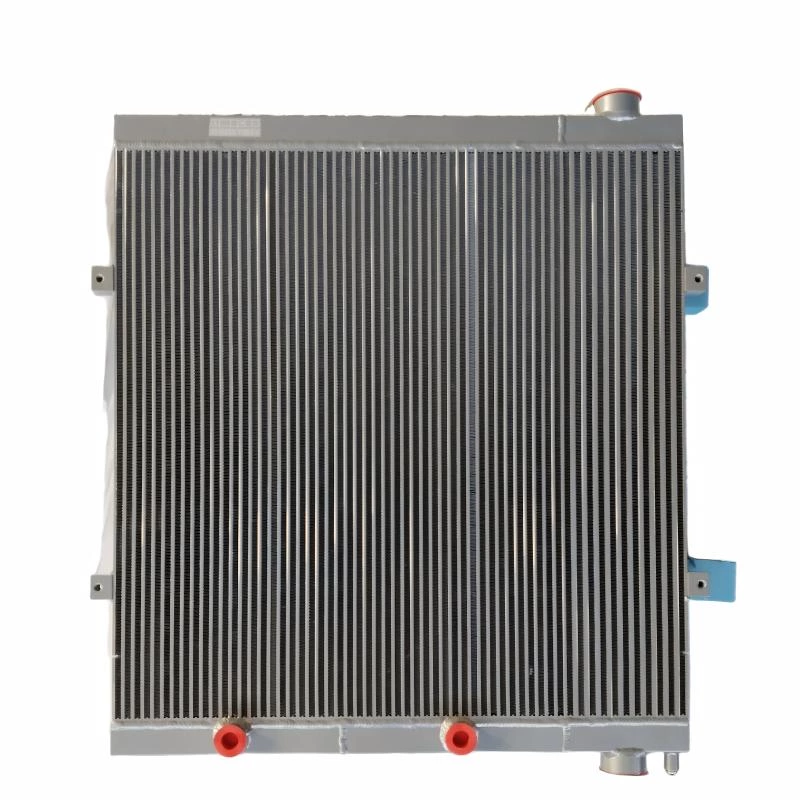
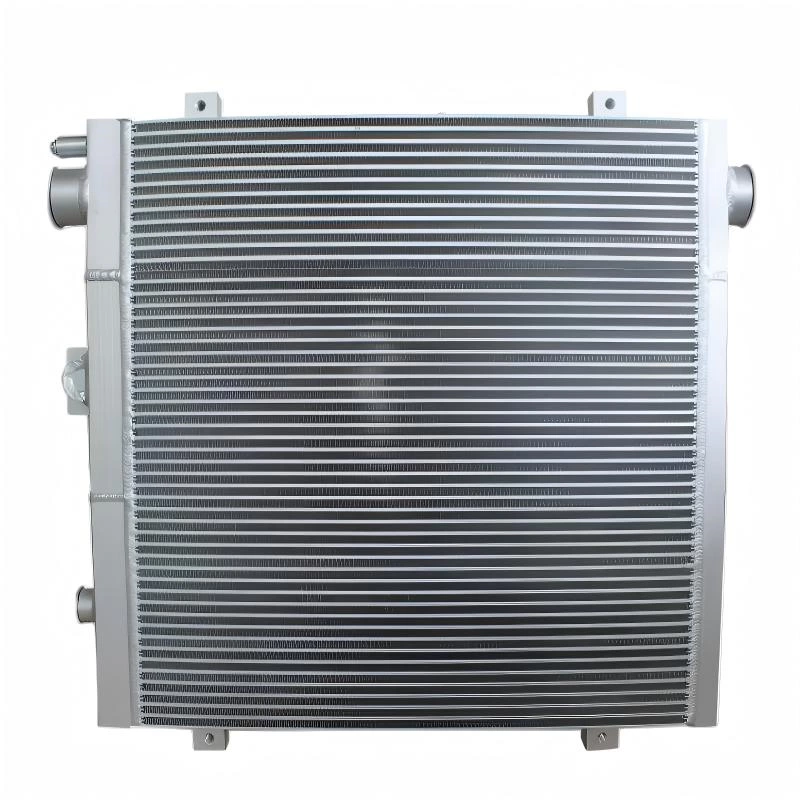
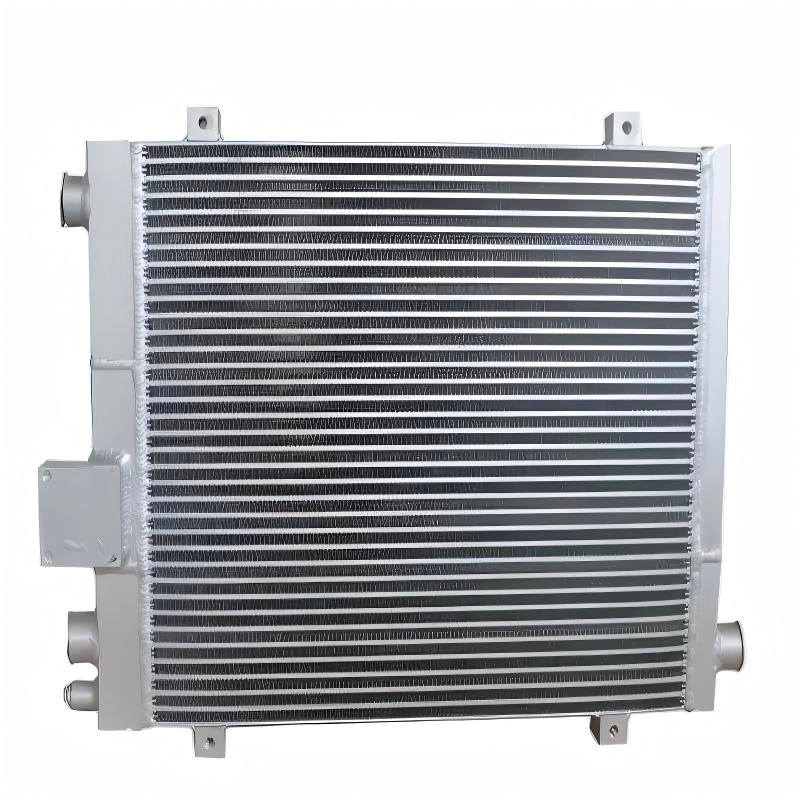
Introduction Of Plate Fin Heat Exchanger
A plate fin heat exchanger is a compact and highly efficient heat exchange device widely used in industrial, automotive, aerospace, energy, and refrigeration applications. It is designed to transfer heat between two or more fluids through thin separating plates and extended fin surfaces. Because of its compact structure, large heat transfer area, and lightweight design, the plate fin heat exchanger is widely recognized as one of the most efficient types of heat exchangers for applications where space, weight, and thermal performance are important.
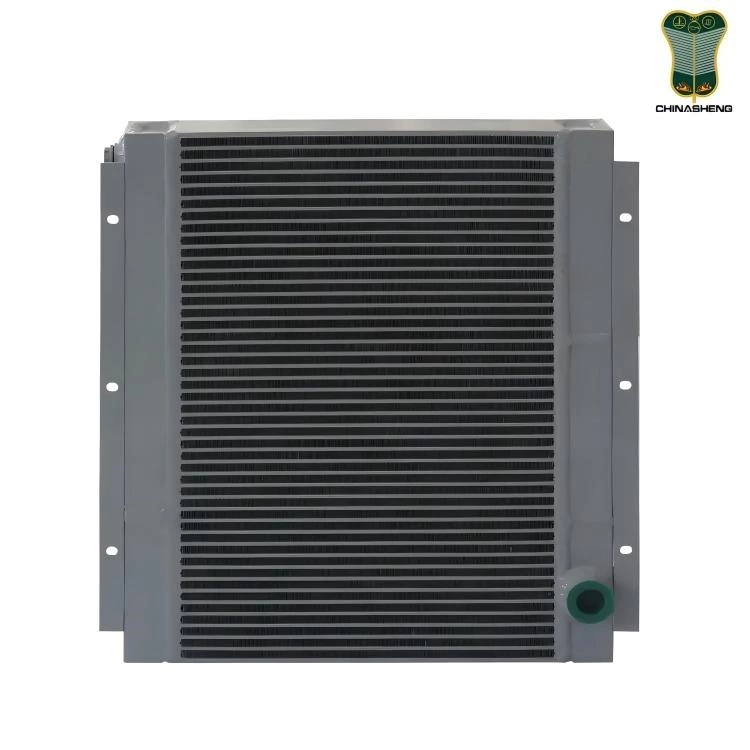
Among different types, the aluminum plate fin heat exchanger is especially common because aluminum offers good thermal conductivity, low weight, and excellent suitability for compact brazed structures. This makes it a practical solution for systems that require efficient thermal management within limited installation space.
What Is a Plate Fin Heat Exchanger?
A plate fin heat exchanger is a type of compact heat exchanger made of multiple layers of plates, fins, seals, and side bars or deflectors. These components are arranged to form separate flow channels for different fluids. The channels are then stacked and brazed together to form a rigid heat exchanger core.
The key feature of this design is the use of fins between the plates. These fins increase the heat transfer surface area significantly and improve heat exchange efficiency by disturbing fluid flow and enhancing turbulence. As a result, the plate fin heat exchanger can achieve strong thermal performance in a relatively small volume.
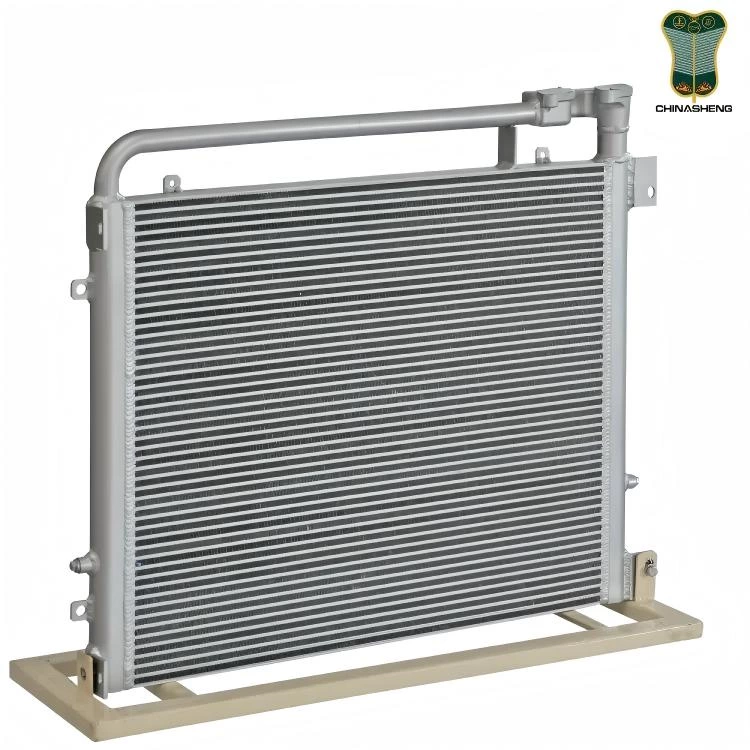
Main Structure of a Plate Fin Heat Exchanger
A typical aluminum plate fin heat exchanger is mainly composed of the following parts:
- Partition plates: separate different fluids and provide the primary heat transfer surface
- Fins: increase heat transfer area and improve fluid-side heat transfer performance
- Seals and side bars: define the flow passages and prevent fluid mixing
- Deflectors or distributors: help guide the flow and improve distribution inside the core
By stacking multiple layers of these flow channels in a controlled arrangement, manufacturers can create a compact core capable of handling different fluids and different thermal duties within one exchanger body.
Working Principle of a Plate Fin Heat Exchanger
The working principle of a plate fin heat exchanger is based on heat transfer through a separating wall. Hot and cold fluids flow through alternating channels inside the heat exchanger core. The fluids do not mix directly. Instead, heat passes through the thin partition plates from the hot side to the cold side.
The fins inside each channel play an essential role in this process. First, they increase the effective heat transfer area. Second, they disturb the flow of the fluid, which helps break the boundary layer and improves convective heat transfer. Heat is therefore transferred not only through the plate surface but also through the extended fin surfaces.
In operation, the high-temperature medium releases heat to the partition plate. That heat is then conducted through the metal and transferred to the fins and the cooler fluid on the other side. Because the fins are thin and highly conductive, the exchanger can achieve efficient heat transfer even in a compact structure.
Features of Plate Fin Heat Exchangers
- High heat transfer efficiency
The fin structure continuously disturbs the fluid boundary layer, improving the heat transfer coefficient and enabling efficient thermal performance. - Compact structure
A plate fin heat exchanger provides a very large heat transfer area within a small volume, making it suitable for systems with limited installation space. - Lightweight design
Aluminum plate fin heat exchangers are especially valued for their low weight, which is important in mobile equipment, vehicles, and aerospace systems. - Strong adaptability
They can be designed for counterflow, crossflow, multi-stream flow, or multi-pass flow arrangements, making them suitable for many different thermal systems. - Multi-fluid capability
A plate fin heat exchanger can handle heat exchange between multiple streams in one compact core, which is difficult for many conventional exchanger types. - High manufacturing precision
Because the structure is compact and the channels are finely arranged, manufacturing requires high precision and advanced brazing technology.
Why Aluminum Is Commonly Used
Aluminum is one of the most widely used materials for plate fin heat exchangers because it offers a strong balance of thermal conductivity, low density, corrosion resistance, and manufacturability. Compared with heavier materials, aluminum helps reduce the total weight of the exchanger while still supporting efficient heat transfer.
It is also well suited to vacuum brazing processes used in compact heat exchanger manufacturing. This makes aluminum plate fin heat exchangers especially popular in industries where both performance and weight reduction are important.
Common Flow Arrangements
Plate fin heat exchangers can be designed with several flow arrangements depending on the heat transfer requirement and system layout.
- Counterflow: hot and cold fluids move in opposite directions for high thermal efficiency
- Crossflow: fluid streams flow perpendicular to each other
- Multi-pass flow: one or more fluids pass through the exchanger in multiple stages
- Multi-stream flow: several fluids exchange heat within the same compact core
This design flexibility is one of the main reasons plate fin heat exchangers are widely used in complex thermal systems.
Applications of Plate Fin Heat Exchangers
Plate fin heat exchangers are used in a wide range of industries because they combine compact size with high thermal performance. Common applications include:
- Air compressors
- Automotive cooling systems and intercoolers
- Hydraulic oil cooling systems
- Construction machinery radiators
- Wind power and energy systems
- Cryogenic and gas processing equipment
- Aerospace thermal management systems
- Industrial process cooling and heat recovery
In these fields, the ability to achieve efficient heat transfer in a lightweight and compact design makes the plate fin heat exchanger a highly practical choice.
Advantages of Plate Fin Heat Exchangers
Compared with many traditional heat exchanger types, plate fin heat exchangers offer several major advantages. They provide high heat transfer performance, excellent compactness, and low weight. They can also be designed for multiple fluids and complex heat exchange duties. This makes them suitable for systems where installation space is limited and performance requirements are high.
Their modular design also supports flexible engineering for different applications, allowing manufacturers to optimize fin type, channel arrangement, and core size for specific operating conditions.
Limitations of Plate Fin Heat Exchangers
Although plate fin heat exchangers offer many benefits, they also have some limitations. Their compact channels can be more sensitive to contamination or fouling if the working fluid is not clean. Manufacturing and brazing requirements are also more demanding than for simpler heat exchanger designs. In some cases, maintenance and repair may be more difficult if the core is severely damaged.
For this reason, the correct selection of materials, flow passages, and operating conditions is important when designing or choosing a plate fin heat exchanger.
How to Choose a Plate Fin Heat Exchanger
Selecting the right plate fin heat exchanger depends on several technical factors, including fluid type, flow rate, operating pressure, temperature difference, allowable pressure drop, space limitations, and corrosion conditions. It is also important to consider whether the system requires a single-stream, two-stream, or multi-stream heat exchange design.
A properly selected plate fin heat exchanger can improve energy efficiency, reduce system size, and support long-term performance in demanding applications.
Conclusion
A plate fin heat exchanger is a compact, lightweight, and highly efficient heat transfer device widely used across industrial and mobile applications. Its performance comes from the combination of thin partition plates, extended fin surfaces, and carefully designed flow channels that enable efficient heat exchange in a limited space.
Because of its high heat transfer efficiency, structural flexibility, and broad application range, the aluminum plate fin heat exchanger remains an important solution for modern thermal management systems.