Introduction Of Plate Fin Heat Exchanger
Aluminum Plate Fin Heat Exchanger
An aluminum plate fin heat exchanger is typically composed of partitions, fins, seals, and deflectors. The fins, deflectors, and seals are arranged between two adjacent partitions to form an interlayer, commonly referred to as a channel.
Multiple interlayers are then stacked according to the flow arrangement of different fluids and brazed together to create a compact plate bundle, which serves as the core of the heat exchanger.
This innovative design allows for efficient heat transfer within a compact structure, making aluminum plate fin heat exchangers highly effective in various industrial applications.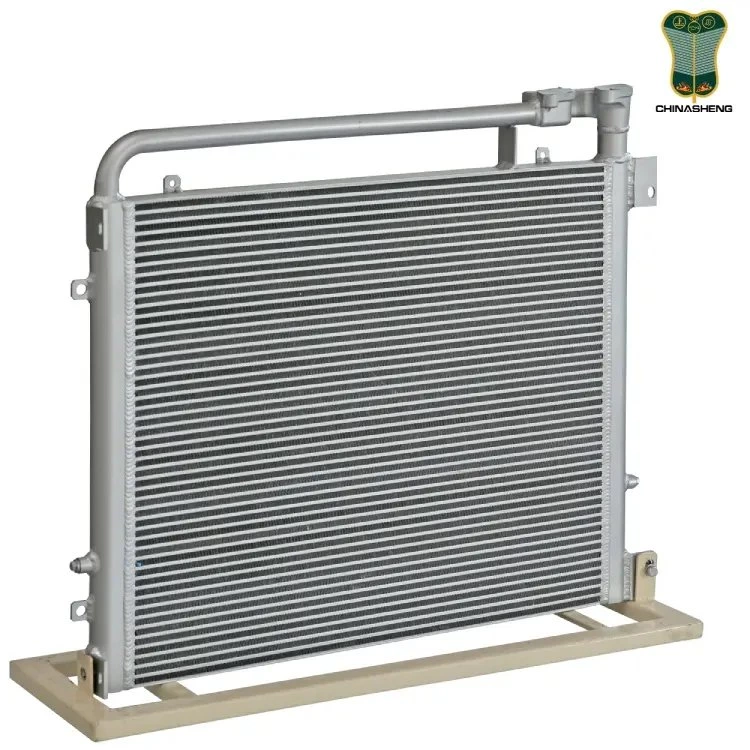
Features of Plate Fin Heat Exchanger
-
High Heat Transfer Efficiency
Due to the disturbance of the fins to the fluid, the boundary layer is continuously broken, resulting in a large heat transfer coefficient.
Additionally, the partitions and fins are very thin and have high thermal conductivity, allowing the plate fin heat exchanger to achieve exceptional efficiency. -
Compact Structure
The plate fin heat exchanger features an extended secondary surface, giving it a specific surface area up to 1000㎡/m³, enabling high performance in a minimal footprint. -
Lightweight Design
Constructed primarily from aluminum alloy, the unit is both durable and lightweight.
Other materials such as steel, copper, and composites are also available for specialized applications. -
Strong Adaptability
Plate fin heat exchangers are suitable for heat exchange between various fluids and can handle phase-change processes.
By adjusting the arrangement and combination of flow channels, they can accommodate different heat exchange modes, such as:Through series, parallel, or series-parallel connections, large-scale systems can be configured efficiently.
This modular design allows for mass production, cost reduction, and enhanced interchangeability through building block combinations.-
Counter flow
-
Cross flow
-
Multi-stream flow
-
Multi-pass flow
-
-
Strict Manufacturing Requirements
The manufacturing process of plate fin heat exchangers demands high precision and advanced techniques, ensuring performance stability and reliability in demanding environments.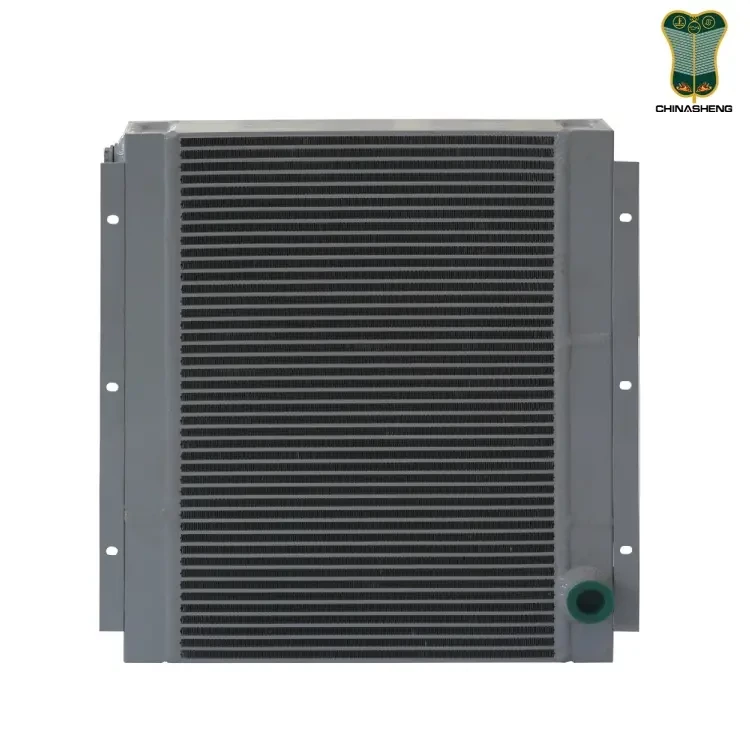
Working Principle of Plate Fin Heat Exchangers
Plate fin heat exchangers belong to the category of partition wall heat exchangers and are widely used for efficient thermal management in diverse industrial applications.
Their defining feature is the presence of extended secondary heat transfer surfaces, known as fins. These fins significantly increase the effective heat transfer area, enabling heat exchange not only on the primary surface (the partition plate) but also along the secondary surfaces of the fins.
Heat Transfer Process
During operation:
-
The high-temperature medium transfers heat to the low-temperature medium primarily through the partition plate.
-
Heat is then conducted along the height of the fins, extending the thermal transfer path.
-
The fins act as channels, guiding heat from the partition to the surrounding low-temperature medium.
Since the fin height is much greater than its thickness, heat conduction along the fin resembles that of a slender rod — meaning thermal resistance cannot be ignored.
The temperature at the fin base (in contact with the partition) equals the partition temperature. From there, heat is convectively transferred from the fin surface to the low-temperature medium, causing a gradual temperature decrease until it reaches the medium temperature at the fin tip.
Conclusion
This combination of conduction and convection allows aluminum plate fin heat exchangers to achieve high heat transfer efficiency in compact, lightweight designs, making them an ideal choice for industrial, aerospace, and energy applications where space and performance are critical.