Function And Working Principle Of Automotive Intercoolers
An automotive intercooler is a gas cooling device installed within a forced induction system, primarily designed to reduce the temperature of intake air compressed by a turbocharger or supercharger. It plays a critical role in modern automotive engines, particularly in high-performance or forced-induction engines.
I. Working Principle of Automotive Intercoolers
The fundamental principle of intercoolers is “using cold to counter heat,” which involves utilizing a cooling medium (air or water) to dissipate heat from compressed air, thereby lowering its temperature.
When an engine's turbocharger compresses air, its temperature rises sharply while density decreases. If this air enters the cylinders without cooling, combustion efficiency drops, potentially causing engine knock, power loss, and component damage.
Internally, intercoolers typically consist of multiple layers of aluminum fins and flow channels. As air moves through these channels, heat is transferred through the metal tube walls to the cooling medium. The cooled air becomes denser and richer in oxygen, promoting more complete combustion. This enhances engine power output while reducing fuel consumption.
II. Types of Intercoolers
Air-to-Air Intercooler
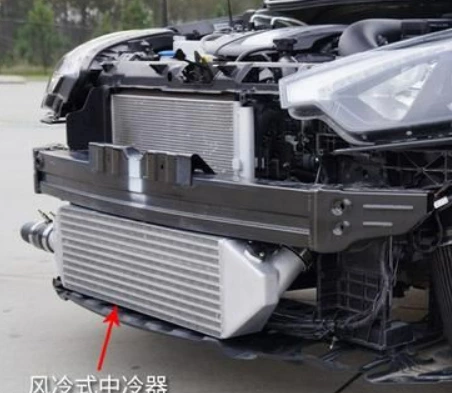
This type dissipates heat through airflow, featuring a simple structure, high reliability, and low maintenance costs. Typically mounted at the front of the vehicle (e.g., behind the front bumper or in front of the radiator), it utilizes airflow generated by vehicle speed for natural cooling.
Water-cooled intercooler (Air-to-Water Intercooler)
This type cools compressed air using circulating coolant water and is usually equipped with a dedicated cooling circuit and reservoir.
III. Integration of Intercoolers and Boosting Systems
Intercoolers work in close coordination with boosters (turbochargers or superchargers), serving as an indispensable component within the boosting system.
Booster Function: Increases intake pressure, enabling the engine to draw in more air. This allows for greater fuel injection volume, thereby boosting power output.
Intercooler Function: Lowers the temperature of compressed air, increases intake air density, further improves combustion efficiency, and protects the engine.
In turbocharged engines, compressed air can reach temperatures of 150°C to 200°C after turbine compression. If this air enters the cylinders without intercooling, it can cause knocking and accelerate engine wear. Installing an intercooler typically reduces air temperature by 40°C to 60°C, effectively improving power performance and stability.
IV. Functions of Automotive Intercoolers
Enhance Engine Power and Efficiency
Cooled air possesses higher density, delivering greater oxygen to the cylinders for more complete combustion, thereby boosting engine power output.
Optimize Turbocharger System Matching
Intercoolers effectively balance turbocharger output with engine intake demand, improving engine adaptability and responsiveness across varying RPMs and operating conditions.
Reduce Fuel Consumption
Lower intake temperatures improve combustion efficiency, enabling greater energy production per unit of fuel and achieving fuel savings.
Protect the Engine and Extend Service Life
By lowering intake temperatures, the intercooler reduces engine knocking and prevents thermal damage to components like pistons and valves caused by high temperatures.
Enhance Vehicle Environmental Performance
Cooled air enables more complete combustion, reducing emissions of unburned hydrocarbons and meeting modern energy-saving and environmental requirements.