How Fin Spacing Affects Radiator Cooling in Dusty Conditions
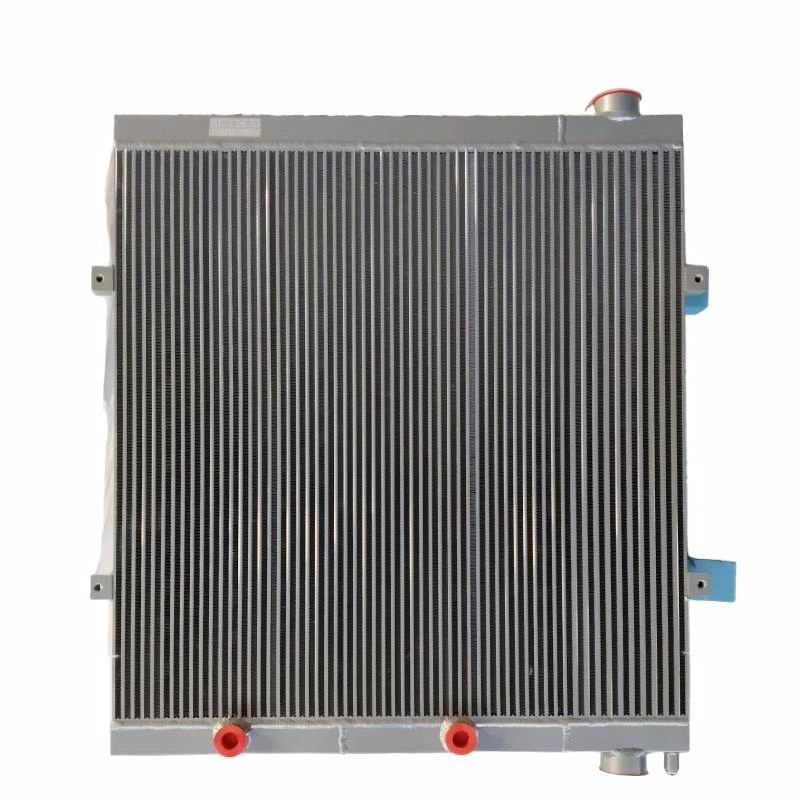
Radiator fin spacing directly affects how easily air can pass through the cooling surface. In clean conditions, tighter fin spacing can provide more heat transfer area within the same frontal size. In dusty environments, however, closely spaced fins can trap dust, sand, fibers, and other debris more quickly.
As contamination builds up, the open area between the fins becomes smaller. Airflow resistance increases, less air passes through the radiator, and cooling performance can gradually decline even when the radiator itself is not damaged.

For construction machinery, mining equipment, agricultural machines, and other off-road applications, the best fin spacing is therefore not simply the smallest possible gap. It needs to balance heat transfer area, airflow resistance, fouling risk, and cleaning requirements.
Why Fin Spacing Matters for Radiator Cooling
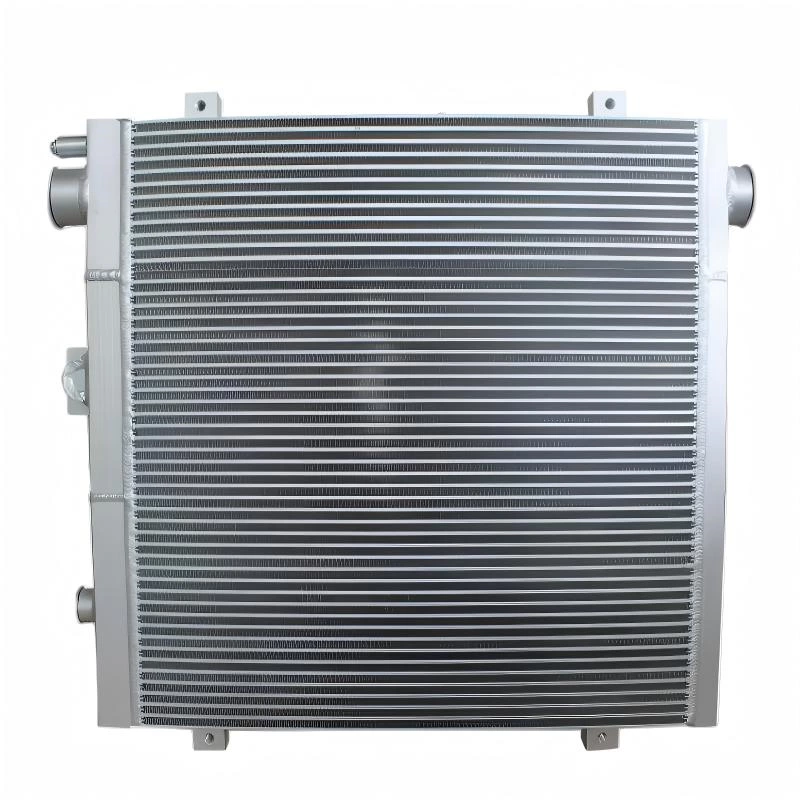
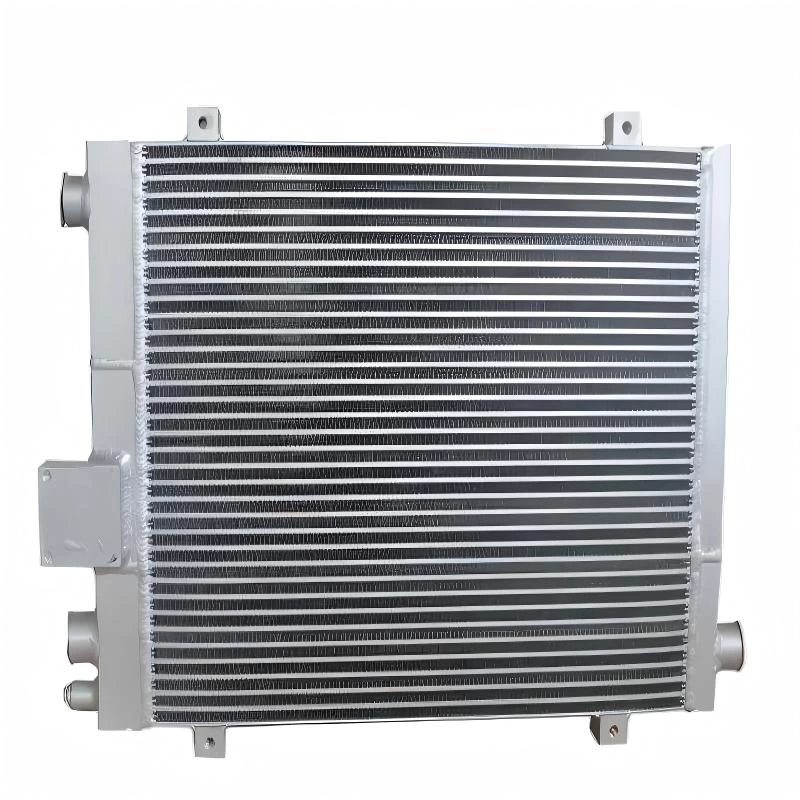
Radiator fins increase the surface area available for transferring heat to the surrounding air. A denser fin arrangement can increase heat transfer area, but it also narrows the passages through which cooling air must flow.

| Fin Design | Main Advantage | Main Concern |
|---|---|---|
| Tighter Fin Spacing | More heat transfer surface within the same area | Higher airflow resistance and greater fouling sensitivity |
| Wider Fin Spacing | Better airflow passage and easier debris removal | Lower fin density within the same frontal area |
This trade-off becomes more important in dusty operating conditions. A radiator that performs well when clean may lose airflow quickly if the fin passages are too narrow for the actual environment.
Fin spacing should balance heat transfer area with airflow resistance and fouling resistance.
What Happens When Dust Builds Up?
Dust normally begins to collect on the air-entry side of the radiator and between the fin passages. As deposits accumulate, the effective airflow area becomes smaller.
The cooling process can be summarized as:

Dust Accumulation → Smaller Air Passages → Higher Air Resistance → Lower Airflow → Higher Operating Temperature
The problem is often gradual. Early contamination may cause only a small airflow reduction, but continued buildup can eventually restrict a much larger portion of the radiator surface.
In severe conditions, the fan may still be operating normally while actual airflow through the radiator is insufficient. This is why overheating can occur even when there is no coolant leak or obvious mechanical failure.
Why Wider Fin Spacing Helps in Dirty Environments
Wider fin spacing gives dust, sand, fibers, and larger debris more room to pass through the radiator instead of becoming trapped between closely packed fins. This can help the radiator maintain usable airflow for a longer period between cleaning intervals.
The benefit is especially important for equipment working in construction sites, mines, farms, quarries, and other environments where airborne contamination is unavoidable. In these conditions, long-term airflow stability can be more important than maximizing fin density.
Wider spacing can also make the radiator easier to clean because compressed air or low-pressure water has more space to pass through the fin passages and remove accumulated debris.
Wider fin spacing can improve fouling resistance and airflow stability, but it does not automatically mean better cooling in every application.
Does Wider Fin Spacing Reduce Cooling Performance?
Potentially, yes. Wider spacing usually means fewer fins within the same frontal area, so the total heat transfer surface may be lower. This is the main trade-off when designing a radiator for dusty environments.

Tighter Fin Spacing
- More heat transfer surface
- Higher airflow resistance
- Greater sensitivity to dust buildup
- More difficult cleaning
Wider Fin Spacing
- Lower blockage risk
- Lower airflow resistance
- Easier debris removal
- Lower fin density in the same area
For this reason, radiator performance should not be judged only when the radiator is clean. A tightly spaced design may provide strong initial heat transfer, but if airflow drops quickly as dust accumulates, its real operating performance may become less stable.
A wider fin arrangement may sacrifice some heat transfer surface, but it can maintain airflow more consistently in dirty conditions. The best design is therefore the one that provides stable cooling throughout the actual operating cycle.
The goal is not maximum fin density, but the best balance between heat transfer, airflow resistance, and fouling resistance.
Fin Spacing for Different Dusty Applications
Different industries expose radiators to different types of contamination, so fin spacing should be matched to the actual working environment rather than selected by one standard rule.

| Application | Typical Contamination | Main Design Priority |
|---|---|---|
| Construction Machinery | Dust, soil, concrete particles | Airflow stability and blockage resistance |
| Mining Equipment | Fine mineral dust | Fouling resistance and cleaning access |
| Agricultural Equipment | Dust, straw, plant fibers | Debris passage and easy cleaning |
| Quarry Equipment | Stone dust and fine particles | Long-term airflow stability |
| Off-Road Equipment | Dust, mud, mixed debris | Balanced airflow and maintenance access |
The more severe the contamination, the more important it becomes to consider fouling resistance and cleaning frequency together with cooling capacity.
Frequently Asked Questions
Is tighter fin spacing always better for cooling?
No. Tighter spacing can increase heat transfer area, but it also increases airflow resistance and makes the radiator more sensitive to dust buildup. In dirty environments, a slightly wider spacing may provide more stable long-term cooling.
Is wider fin spacing better for excavators?
It can be beneficial because excavators often operate in dusty, muddy, or debris-heavy environments. Wider spacing can help reduce blockage and make cleaning easier, but the final choice still depends on airflow, heat load, fan capability, and available radiator size.
Does dust increase radiator pressure drop?
Yes. As dust and debris accumulate between the fins, the open airflow area becomes smaller. This increases air-side resistance and reduces the amount of cooling air passing through the radiator.
Does wider fin spacing reduce cooling capacity?
It can reduce fin density and total heat transfer surface within the same frontal area. However, in dusty environments, better airflow stability and lower fouling may help maintain more consistent real-world cooling performance.
What information is needed to choose radiator fin spacing?
Useful information includes the operating environment, contamination type, fan and airflow data, ambient temperature, duty cycle, cleaning frequency, and available installation space.
Conclusion
Radiator fin spacing affects heat transfer, airflow resistance, fouling, and cleaning. Tighter spacing can provide more heat transfer surface, while wider spacing can reduce blockage risk and help maintain airflow in dusty conditions.
For construction, mining, agricultural, and other heavy-duty equipment, the best fin spacing should be selected according to the actual operating environment. The goal is not maximum fin density, but stable cooling performance throughout the equipment's working cycle.